
Tracey Emin's ‘Baby Things’ and displacing artwork: A discussion with Eleanor Getting
Words by Lizzy Jones
Edited by Myfanwy Greene
———
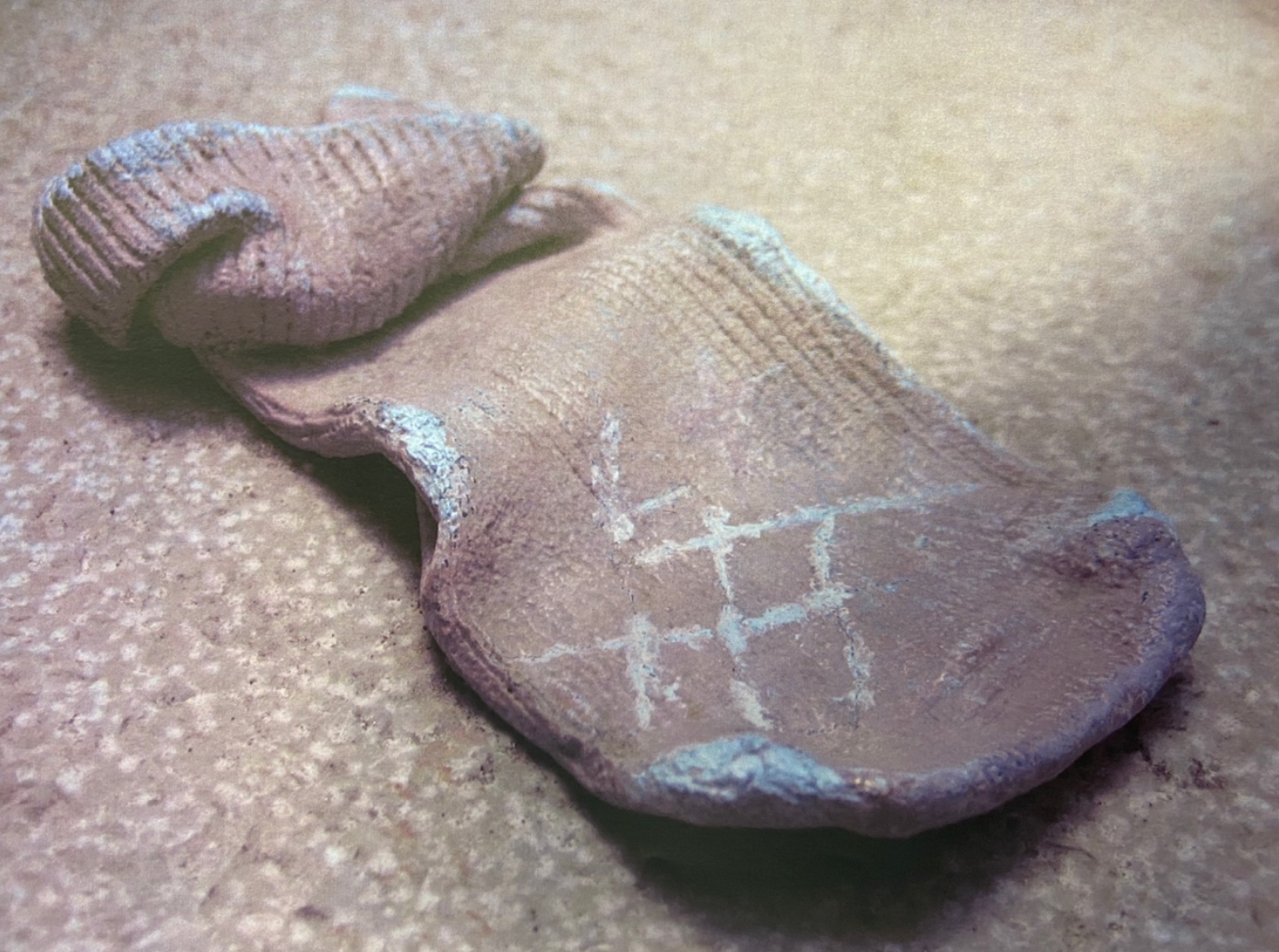
Tracey Emin, ‘Little Sock’, 2007, image scanned from British Council archive by Eleanor Getting.
I recently had the privilege of talking with former co-director of the Norman Rea Gallery Eleanor Getting, who wrote her dissertation on Tracey Emin’s ‘Baby Things.’ This work was created in 2006 for the first year of the Folkestone Trianneale. It consisted of bronze sculptures cast from real baby items that are installed around the town to appear as if they have been lost. In 2007, part of the work was reproduced and displayed at the British Pavilion exhibition at the Venice Biennale, ‘Borrowed Light.’ It was displayed for a second time in 2010 at the London Foundling Museum as part of the exhibition, ‘Mat Colishaw, Tracey Emin and Paula Rego: At The Foundling.’ The redisplay of the site-specific artwork led me to explore how ideas of displacement can be applied to artworks. In my discussion with Eleanor, we covered the importance of site-specificity to the meaning of artworks, the controversial platform of global sites and elite museums, the possibility that recontextualisation can provide new meaning, and bring ideas of home and comfort.

Tracey Emin, ‘Teddy Bear (Baby Things)’, 2008, image taken by Eleanor Getting.
When Emin was invited to create the artwork for Folkstone (Kent), she chose to create it for a very specific group of people in Folkstone: teenage mothers. In the year the work was created, teenage pregnancy rates in the UK were the highest in Folkestone. Eleanor talked about how Emin wanted to make something particular for teenage mothers. The ‘Baby Things’ piece evokes ideas of comfort and home, questions being lost and abandoned, and explores themes of belonging. With the stigmatisation against teen pregnancy, the piece asks: where do these mothers belong?
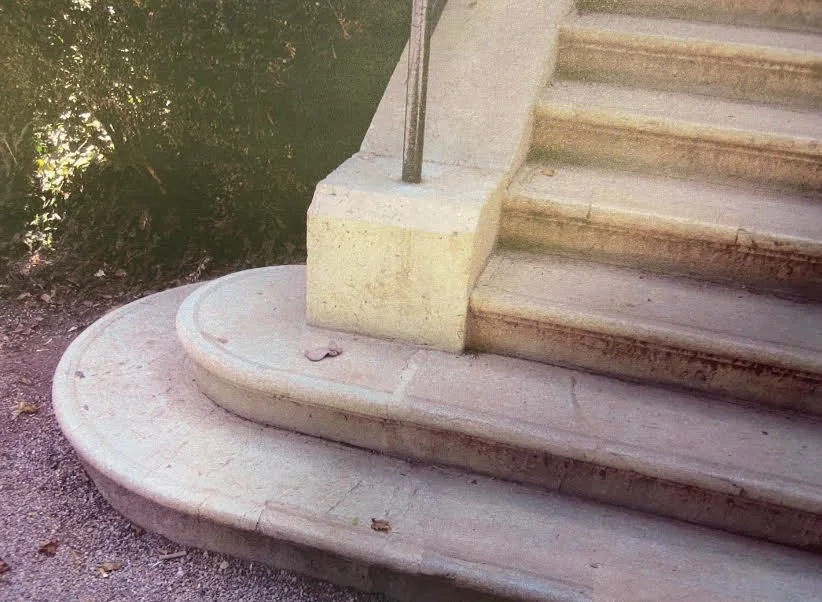
Tracey Emin, ‘Little Sock’, 2007, image scanned from British Council archive by Eleanor Getting.
Eleanor outlined the theory of site-specificity which underpinned her dissertation, and how it allowed her to focus particularly on a certain theme in the works. She also connected it to the bottom-up approach that artists can take by being specific to a certain audience, rather than allowing big institutions to determine the voice of the canon, by deciding what counts as ‘important’. In her dissertation, Eleanor questioned how effective global stages (like the Venice Biennale) can really be at displaying artworks so thoroughly grounded in both physical space and theoretical context. The artist exhibiting at the Biennale each year is the sole representative of their country, and the sensationalised nature of the event means that the artwork in that context was intended to speak to everyone and every theme. The piece from ‘Baby Things’ at the Biennale was a singular sock, displayed on the steps to Britain’s Pavilion. Redisplayed in this way, the work loses its nuance and the personal message to teenage mothers in Folkestone. As eloquently described by Eleanor, it addresses the bigger issue of whether artwork should be applicable to every scenario, and the role smaller sites can play in offering a site to view these works without losing their potency.
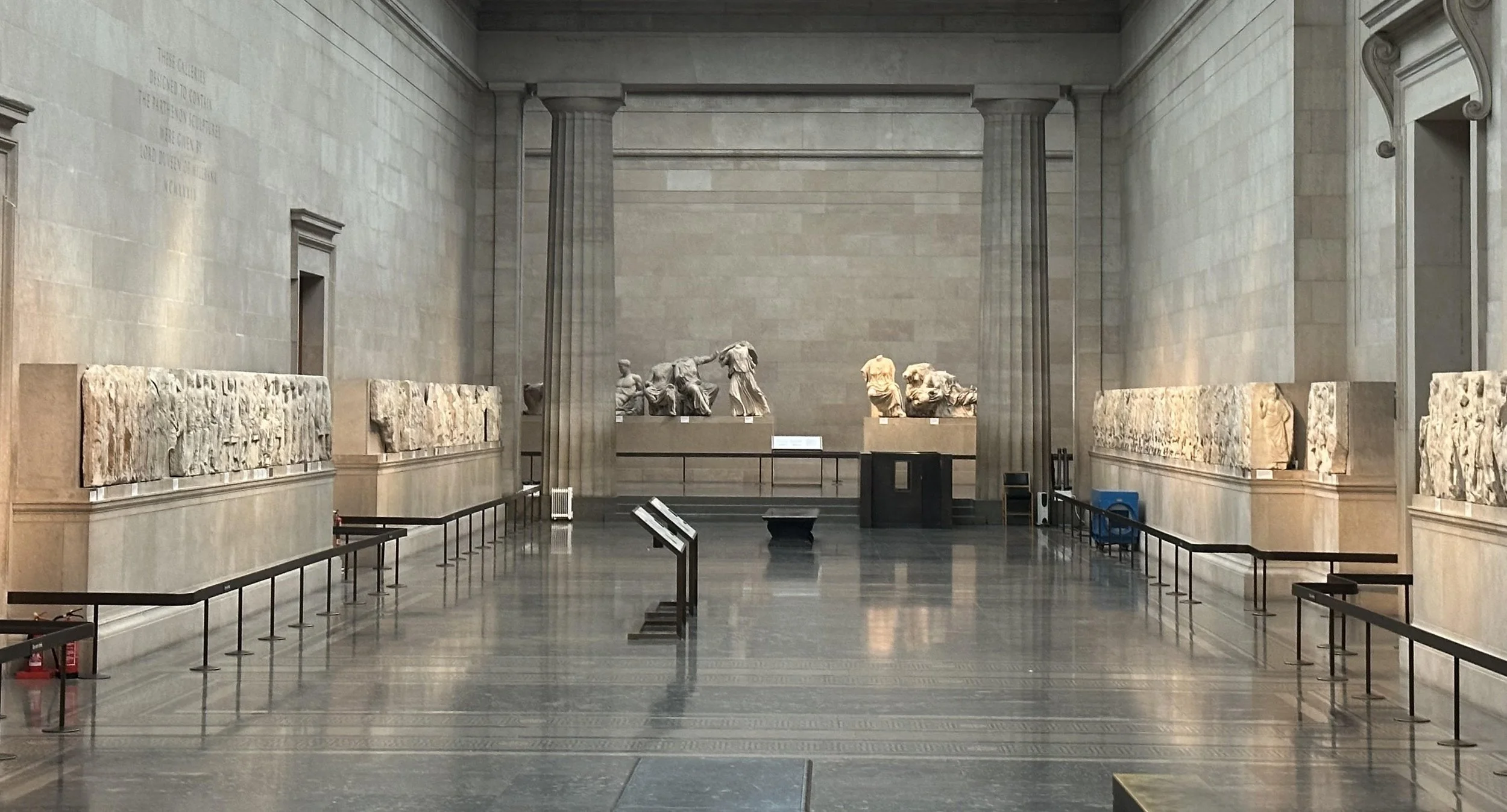
Elgin Marbles at the British Museum, image source Elgin Marbles - Wikipedia.
Moreover, Eleanor further connected this issue of big institutions redisplaying artworks to the stealing and appropriation of specific cultural works by colonial powers. A specific example familiar to many of us is the British Museum. Perhaps the most famous instance of this is the Elgin Marbles, which are hugely debated sculptures from the Pantheon which were displaced from Greece to Britain in the 1800s.
The scholarship surrounding this is extensive, but here I have included a few of my own thoughts in relation to this idea of site-specificity. The claim made by the British Museum for maintaining their hold on these works is that it allows an appreciation of the Elgin Marbles’ space in world cultural history. However, the museum is filled with so many works from so many different cultural contexts, with no connection other than as a statement of the global imperialist power once exercised by the British Empire. The question arises, how do the Elgin Marbles stand out to speak to their own history without getting lost in the great number of objects on display? While we may recognise them when visiting the museum due to their great presence in the media, what about all the other works site-specific to their cultural histories yet lost in the museum which seems to function as a huge ‘cabinet of curiosities.’
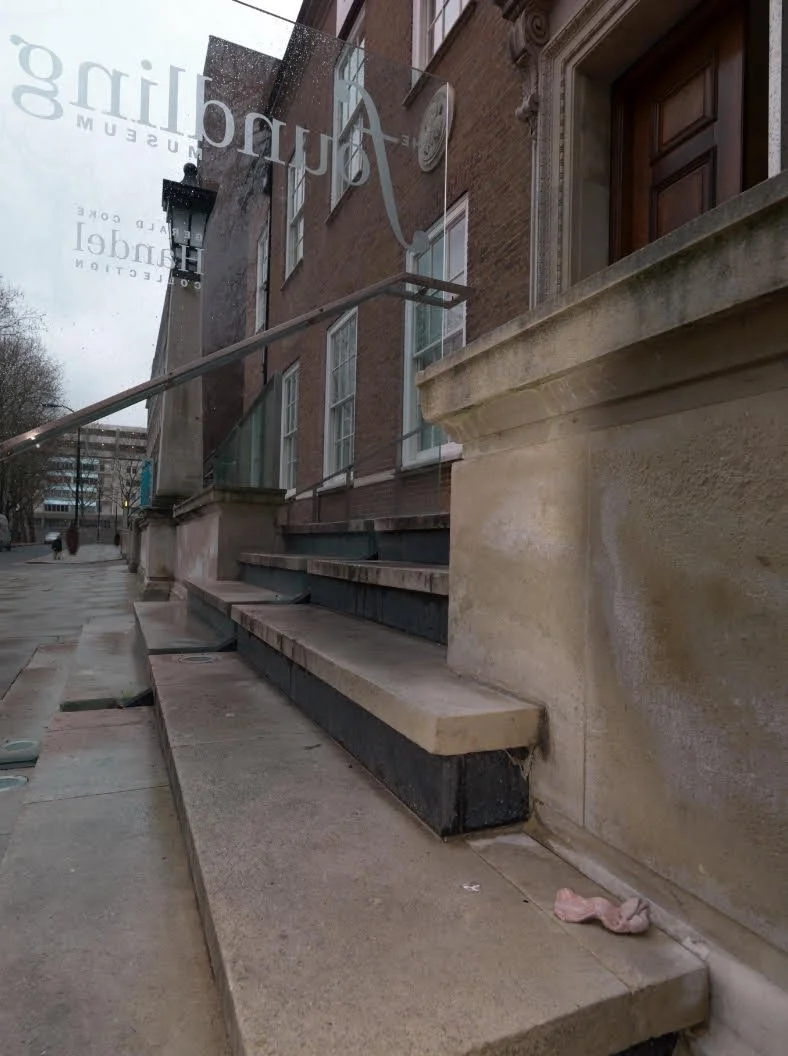
Tracey Emin, ‘Little Sock’, 2010, taken from the Foundling Museum Archive by Eleanor Getting.
The final location Emin’s ‘Baby Things’ was displayed was the Foundling Museum in London, and demonstrates that smaller sites with a targeted purpose can represent a way to provide a historical lens to the issues addressed by the original site specific work. In Victorian London, foundlings were some of the most outcast members of society. During my conversation with Eleanor, I reflected on a previous interview I had done with a historian of childhood, Dr Victoria Hoyle. In our discussion, Dr Hoyle highlighted how children are a marginalised group who are particularly vulnerable to displacement. In the case of foundlings, they are displaced from their heritage, no longer able to access their family past, orphaned and anonymised.
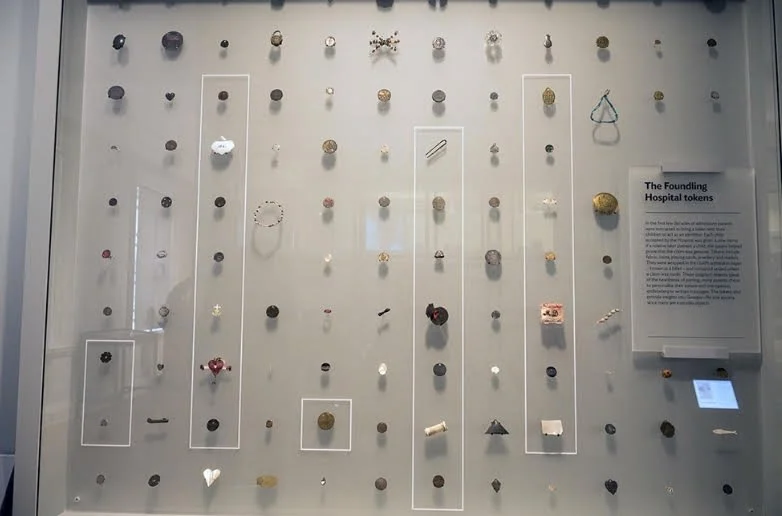
Display of The Foundling Hospital Tokens, image source https://dawnknox.com/the-foundling-hospital-museum/.
Emin’s work, and the specific audience of teenage mothers it addressed in Folkestone also adds another dimension to our consideration of the Foundling Museum; which is the mothers who had to give their children up, likely some of whom were only young girls themselves. In particular, Eleanor explored how this strengthened the piece’s original message in Folkestone, by placing teenage mothers in the wider narrative of marginalisation faced by the group throughout history. Furthermore, the objects, positioned just outside the museum, strongly connect with the tokens displayed inside the museum in a large glass case. These were typically handcrafted by the mothers who were forced to give up their children, and highlights that “making is connecting.” Despite the displacement of mother and child from each other, these items materially bound them together, representing the time and care put into them by the mothers, as a final act of love.
As Eleanor explained, these objects provided a sense of comfort and belonging, demonstrating that home is not only a place but can also be a hand-crafted object, a key theme for ‘Displacement: Changing Frames.’