Dining with Art
Words by Charlotte Whitehill
Edited by Myfanwy Greene
Inspired by the upcoming exhibition at the Norman Rea Gallery, ‘Food for Thought: A Tasting Menu’, I have decided to write a blog piece about food and its use in art, as inspiration and even as the medium!
‘Food for Thought: A Tasting Menu’ is a celebration of one of life’s most cherished necessities. Food has served as inspiration, subject matter, material, and, of course, sustenance, for artists. Whilst a basic need for survival, food also has a cultural richness that evokes feelings of community, memory and home. Departing from food’s role in art as a status symbol and display of wealth in art, ‘Food for Thought’ strives to present food as being for everyone, a fundamental part of all life. Food’s universal presence makes it one of the most popular inspirations in art. Artists use food to connect with viewers, critique consumerism, provoke desire, and simply to celebrate beauty.

Katy Perry ‘California Girls’ Music Video Still.
One artist who has embraced food as a visual fantasy is Will Cotton. For over twenty years, cakes, candies, and confections have dominated Cotton’s work. His hyperreal oil paintings depict surreal landscapes made of frosting, macarons, and spun sugar, often inhabited by idealised female figures. These sweet environments are seductive, drawing attention to the advertising industry’s ability to manufacture desire. When first encountering his work, it is easy to mistake the paintings for elaborate film sets rather than meticulously rendered canvases. Cotton’s influence has also extended into popular culture, most notably Katy Perry’s ‘California Girls’, where his candy-coated visions shaped the video’s aesthetic. While Cotton’s work is undeniably playful, it also seeks to expose the artificial sweetness of consumer fantasy.
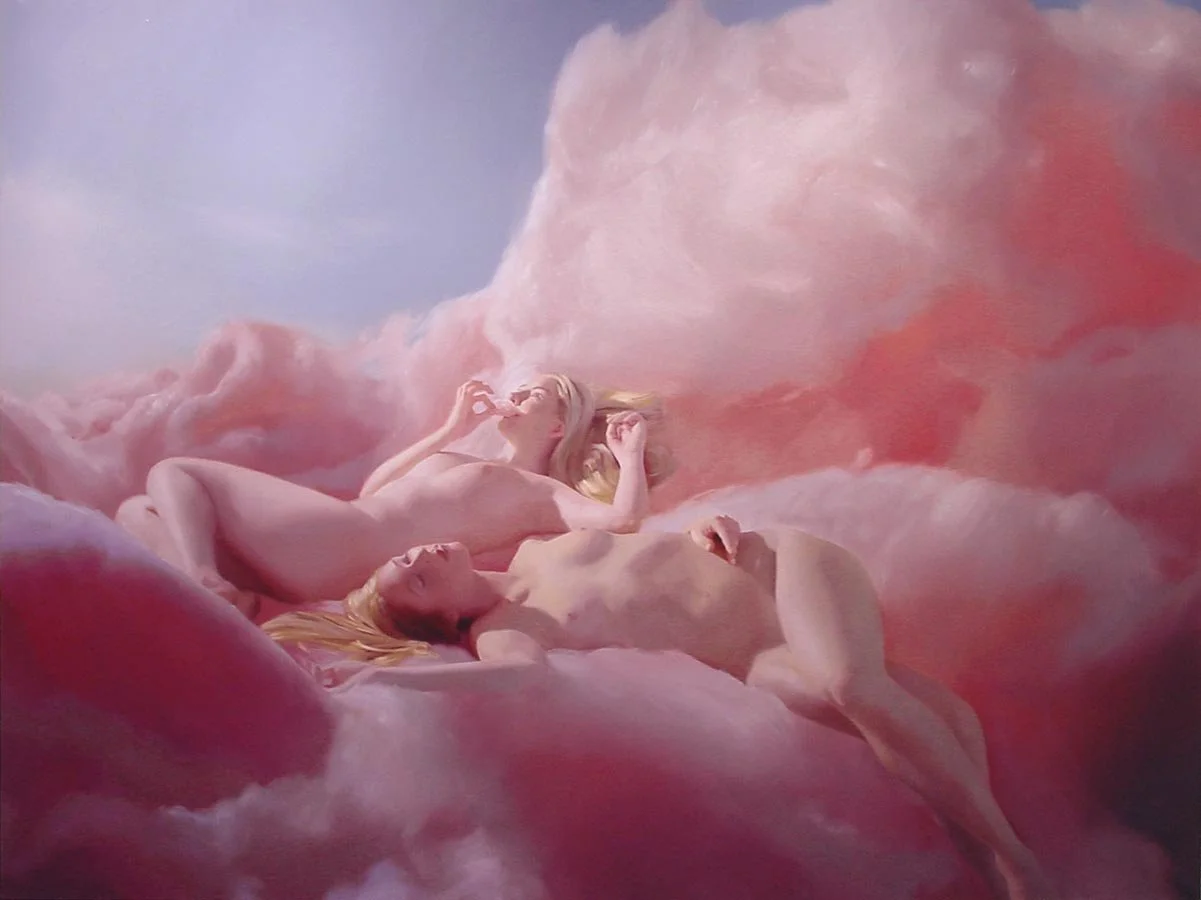
Will Cotton, ‘Cotton Candy Clouds’, 2004. Oil on linen, 75 x 100 inches.
Just like the macaroni art I used to make in Primary School, some of the most compelling food-based artworks abandon paint altogether. By substituting traditional materials with edible or domestic products, artists collapse the distance between art and the everyday. Although, these artists might be rather more adventurous than resorting to uncooked pasta!
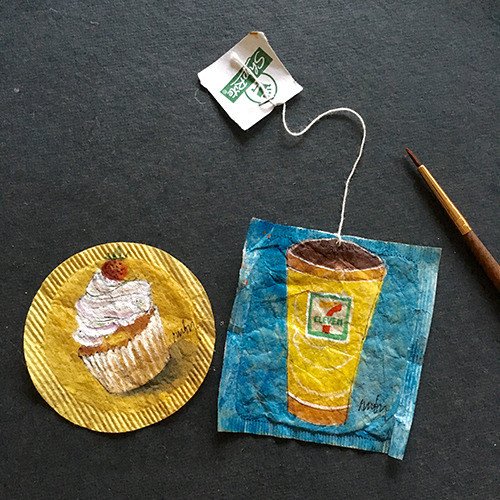
Ruby Silvious, ‘52/38 Seven Eleven’, 2016. Watercolour and Gouache.
Ruby Silvious’s project ‘363 Days of Tea’ was one of the key inspirations for ‘Food for Thought’. Silvious transforms used tea bags into miniature canvases. Beginning in 2015, Silvious documented her daily experiences by painting on discarded tea bags, embracing their stains, tears, and irregularities. Tea, often associated with comfort, thereby becomes a vehicle for reflection. What might seem discarded or disposable is reimagined as intimate and expressive, asking: when is a tea bag more than just a tea bag?
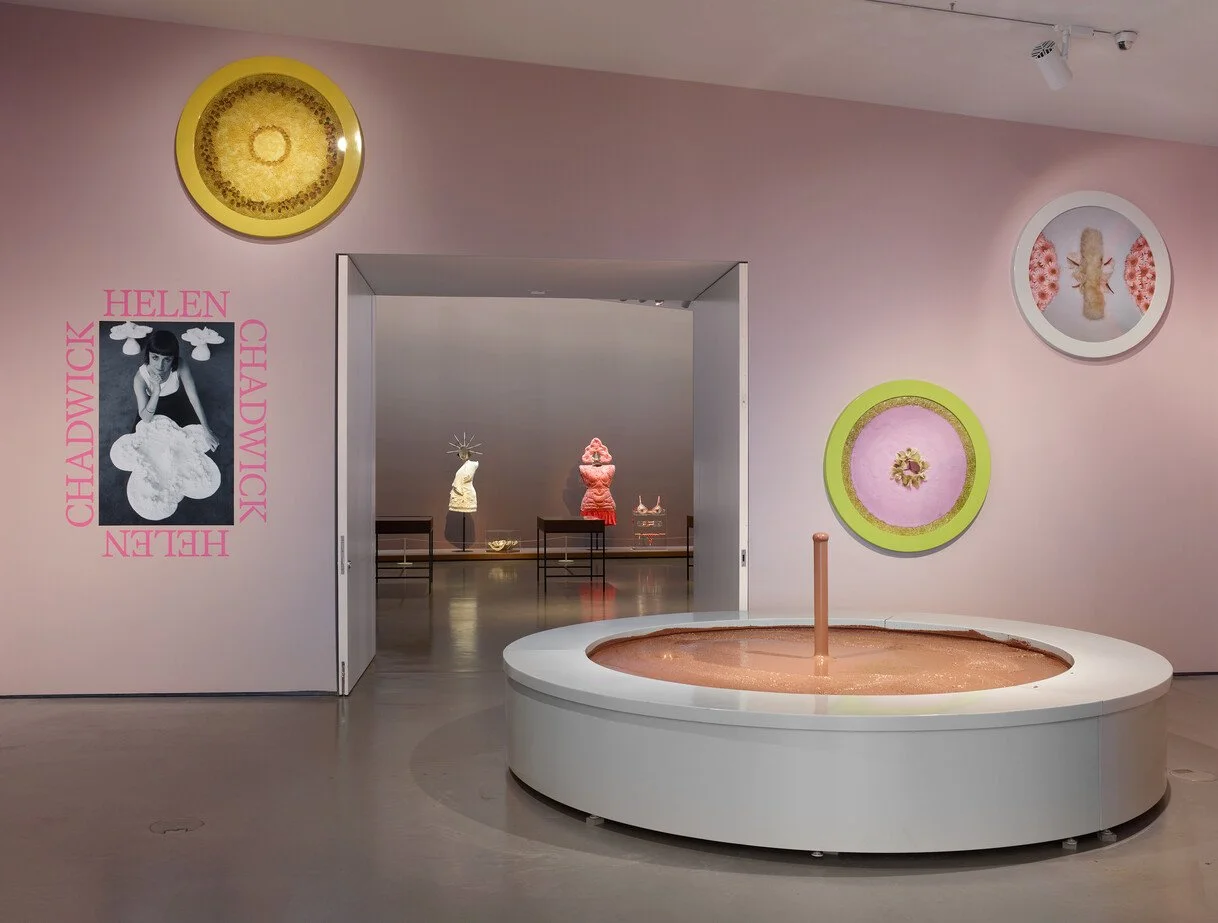
Helen Chadwick ‘Installation view of Helen Chadwick: Life Pleasures at Hepworth Wakefield, 2025, showing Cacao, by Helen Chadwick’, 1994. Chocolate, aluminium, steel and electrical apparatus, 85 by 300 by 300 cm. (Photograph Michael Pollard).
Food as a sensory experience is pushed to its limits in Helen Chadwick’s ‘Cacao’ (1994). I was able to experience this work in person, and it was an unforgettable experience both in terms of viewing the artwork and smelling it! A Jacuzzi-sized fountain of molten chocolate bubbles continuously, filling the space with sounds and smells. At first glance, it resembles a muddy hot spring, complete with an awkwardly phallic central column. While chocolate typically signals indulgence and pleasure, here it becomes almost overwhelming and slightly unsettling. Unfortunately, none of it was edible! Chadwick’s work confronts desire and disgust simultaneously, reminding us that pleasure can easily tip into excess.
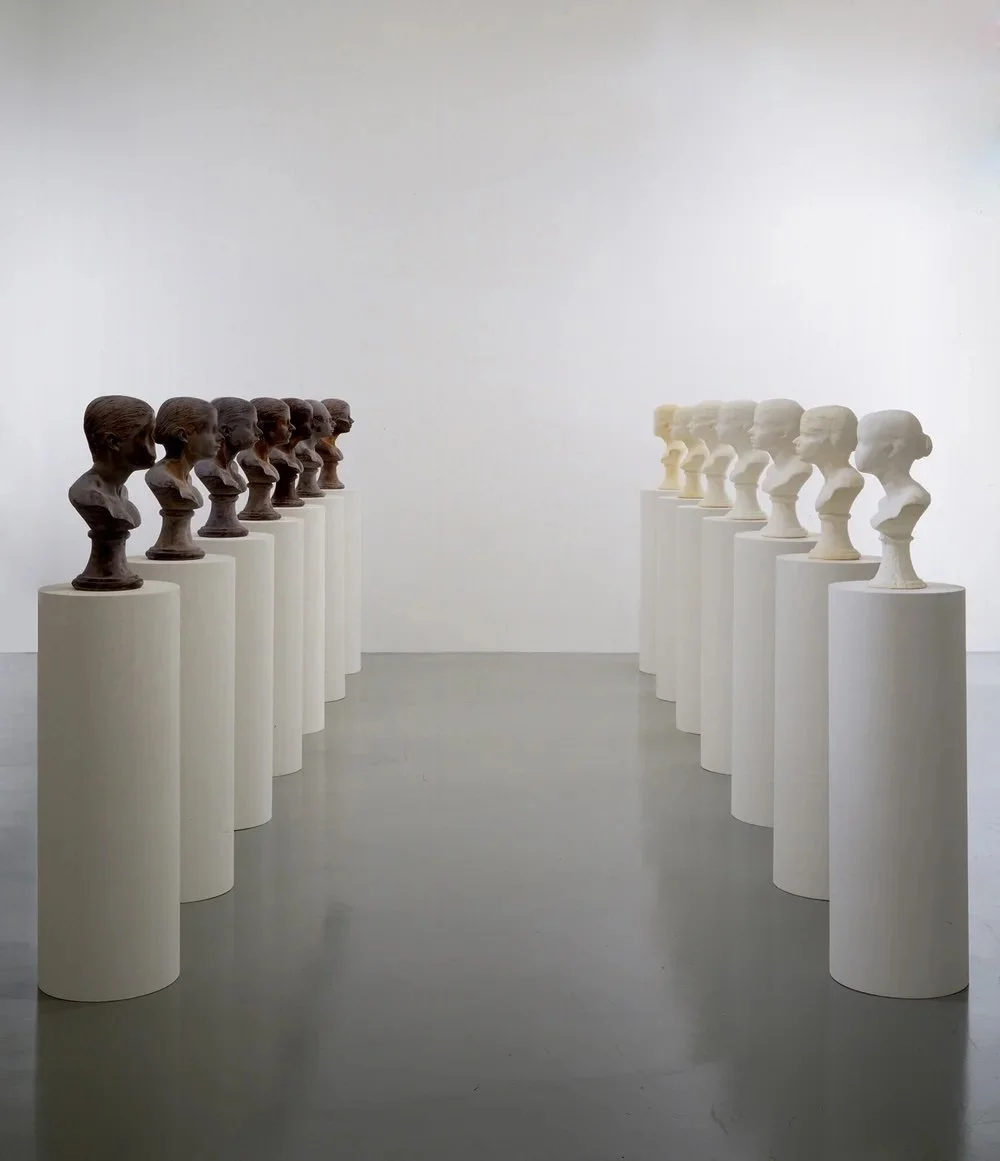
Janine Antoni, ‘Lick and Lather’, 1993. Seven licked chocolate self-portrait busts and seven washed soap self-portrait busts on fourteen pedestals, busts: 24 x 16 x 13 inches and pedestals: 45 x 16 inches.
Questions of intimacy and the body powerfully emerge in viewing Janine Antoni’s ‘Lick and Lather’ (1993). Antoni cast busts of her own head in chocolate and soap, then reshaped them by licking and washing. Drawing on the classical ideal of proportion, she disrupts assumptions about beauty through acts of consumption and care. Chocolate becomes a symbol of desire and indulgence, while soap stands in for cleanliness and beauty. These materials, found in the home, root the work in private ritual. The resulting busts are both self-portraits and records of bodily interaction. I think if I were a sculptor, I would definitely choose chocolate as my medium!
Decay is unavoidable when food enters the gallery, something starkly addressed in Jana Sterbak’s ‘Vanitas: Flesh Dress for an Albino Anorectic’ (1987). Composed of raw flank steaks sewn into a dress, the work confronts vanity, mortality, and the fragility of the body. As the meat inevitably rots, the artwork embodies the vanitas tradition, reminding viewers of death and impermanence. It is not hard to imagine the practical challenges of exhibiting such a piece. I would really not want to be around when the meat starts to go off… Yet, this discomfort is precisely the point.
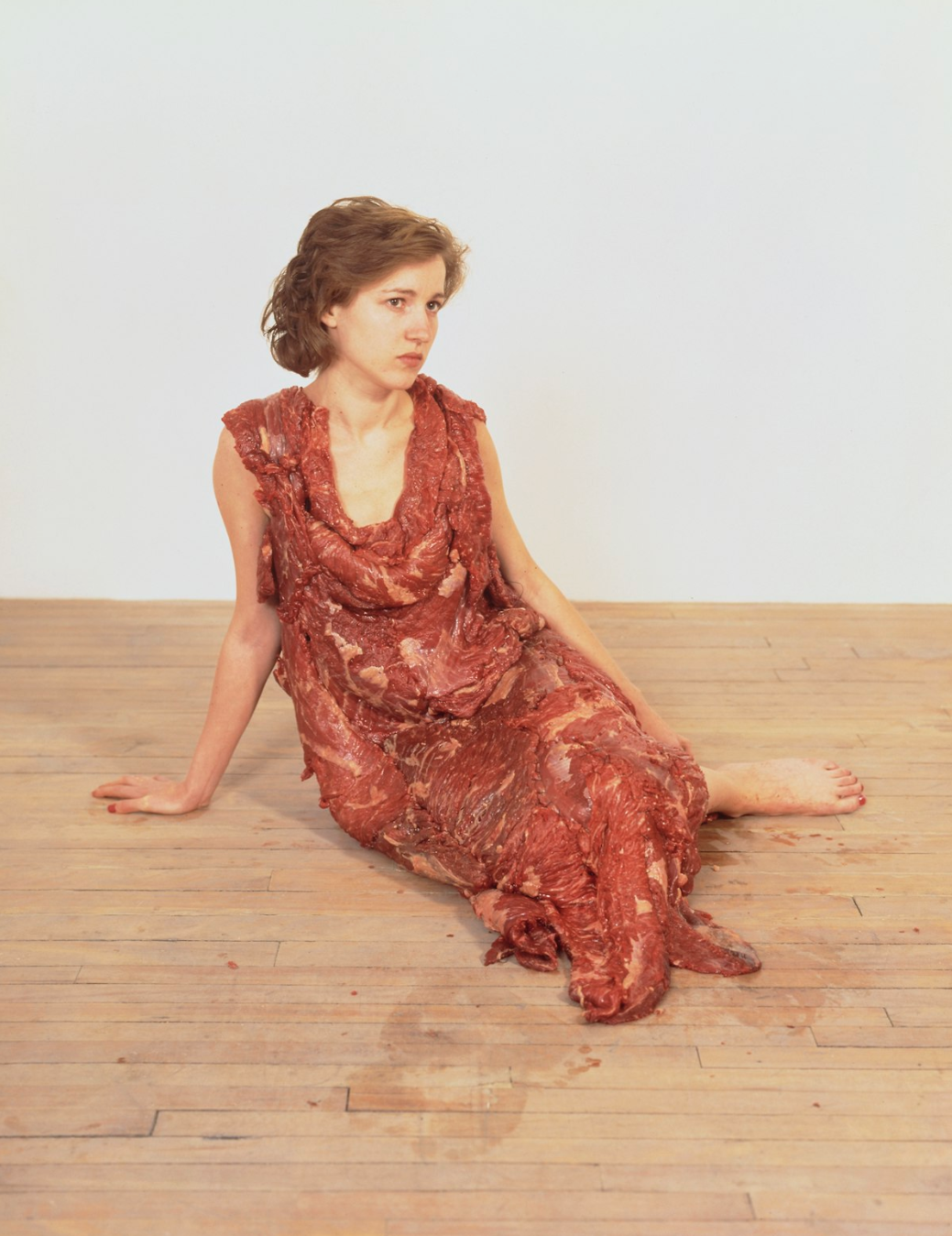
Jana Sterbak, ‘Vanitas: Flesh Dress for an Albino Anorectic’, 1987. Mannequin, flank steak, salt, thread, 62 ¼ x 16 ½ x 11 ⅞ inches.
Food as an artistic medium is compelling because it is temporary, sensory and fascinating. It engages sight, smell, taste, touch and even sound, collapsing the distance between viewer and artwork. It ties into care, consumption, and decay, processes we experience daily. At the same time, edible art presents challenges: preservation, hygiene, and interpretation. Is it art or just dessert? By using food, artists disrupt the exclusivity of ‘high art’. Everyone, to some extent, understands hunger, pleasure, and waste.
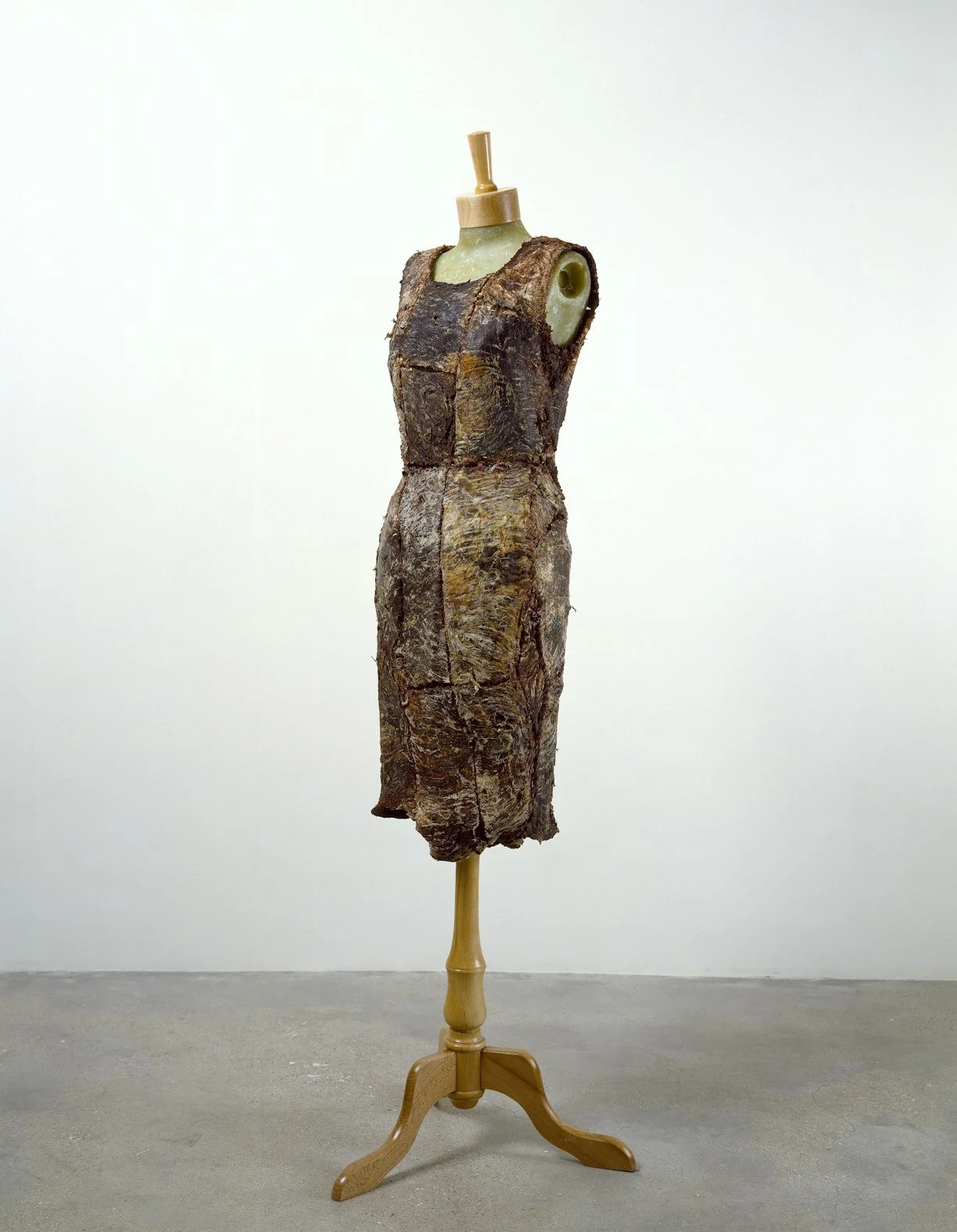
Jana Sterbak, ‘Vanitas: Flesh Dress for an Albino Anorectic’, 1987. Mannequin, flank steak, salt, thread, 62 ¼ x 16 ½ x 11 ⅞ inches.
Food can be more than a snack. It is loaded with memory, emotion, and symbolism. Using food invites intimacy into the gallery, challenging the preciousness of traditional art objects. So, next time you’re piping icing, stacking pancakes, or carving a pumpkin, maybe you’re an artist too. Art doesn’t have to last forever to make an impression.
‘Food for Thought: A Tasting Menu’ is open at the Norman Rea Gallery from Tuesday 10th February 2026 until Friday 27th February 2026. Do come along to see wonderful artworks, in a range of mediums, that celebrate food and the comfort it provides for so many and its impact on everyone globally.