The Photo-Novel: A Short History
Words by Izzy Read
Edited by Myfanwy Greene
Perceived by many as a strange relic of the 1970s and 80s, the photo-novel may be an artefact with which you are not familiar. Published mainly in women’s weekly magazines, the term has been used to describe a type of visual narrative, often serialised, which combines photography and text (usually in the form of speech bubbles). Borrowing many of the conventions of the “sentimental short story”, these works have typically been dismissed as frivolous and formulaic; their largely female audience berated as naive and silly; and the genre as a whole viewed as inferior to that of the TV show, which was seen to render the photo-novel obsolete. However, exploring the history of this curious narrative genre, I would like to argue that the photo-novel is due a re-evaluation.
Born out of the Mediterranean during the post-war period, the first photo-novel was Italian, and can be dated back to 1947. Though there is some debate over which arrived first on the market, ‘Nel fondo del cuore’ (From the Bottom of My Heart), published as a serial by the Italian weekly Il Mio Sogno (My Dream) on 20th July, is widely considered to be the first example. The format then quickly gained momentum with the term “fotoromanzo” (photonovel) being coined just two weeks later in the pages of the magazine Bolero Film.
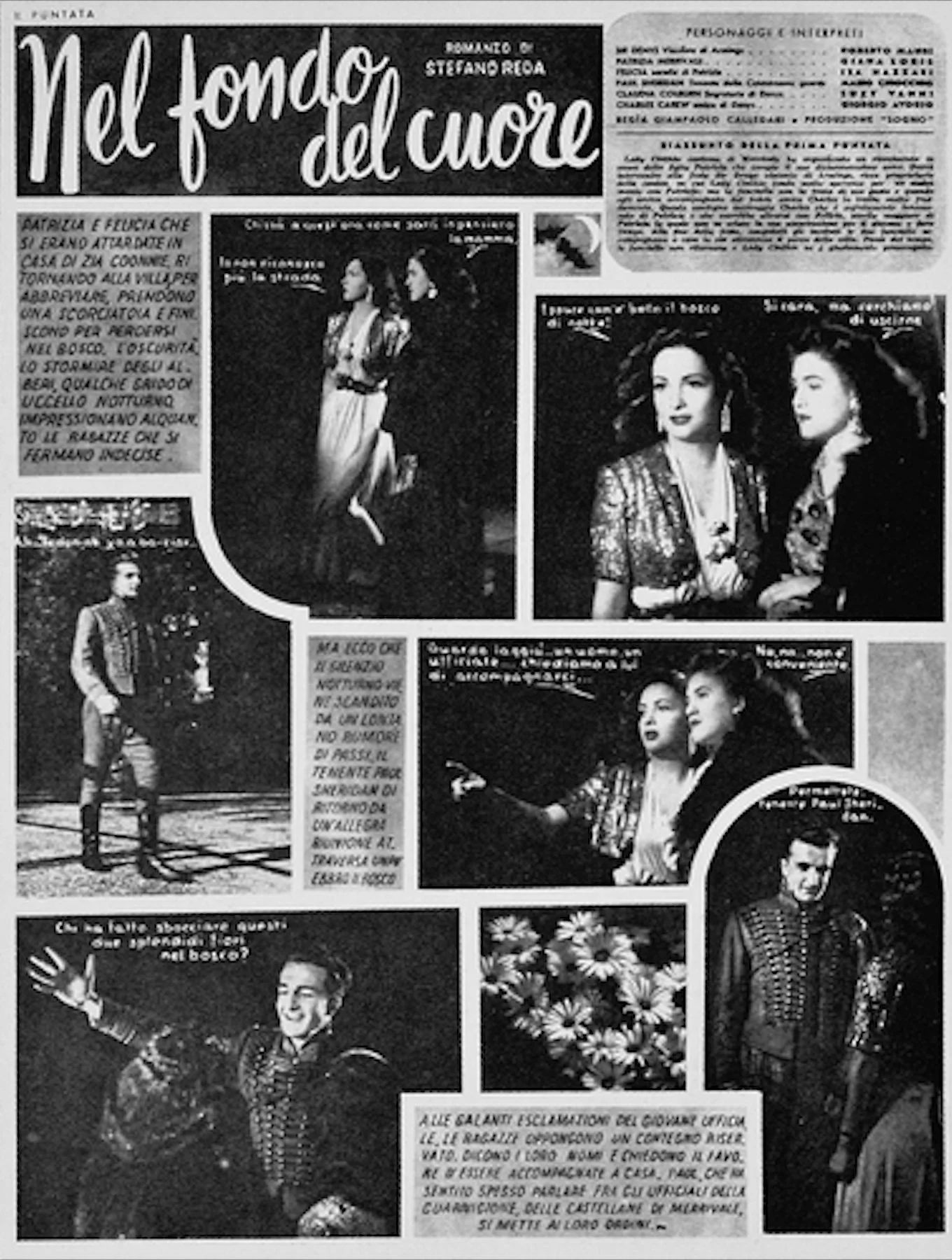
Opening Page of the Second Instalment of ‘Nel fondo del cuore’ (From the Bottom of My Heart), in Il Mio Sogno (My Dream), 27 July 1947.
Spreading to popular weeklies across the Mediterranean, it soon outmoded the film-novels and drawn-novels from which it emerged. Where film-novels translated existing films into image sequences, the photo-novel offered a unique story designed to be relatable to the reader and play on their desires and aspirations. Similarly, it acted as an obvious continuation of the illustrated novel (a short-lived artform which imitated the conventions of the film novel through illustrations). Replacing skilled illustrators with inexperienced actors and photographers, photo-novels proved much cheaper and easier to produce. With its readers numbering in the millions, this new format became hugely successful, remaining a best-seller in countries like Italy, France and Belgium for more than two decades.
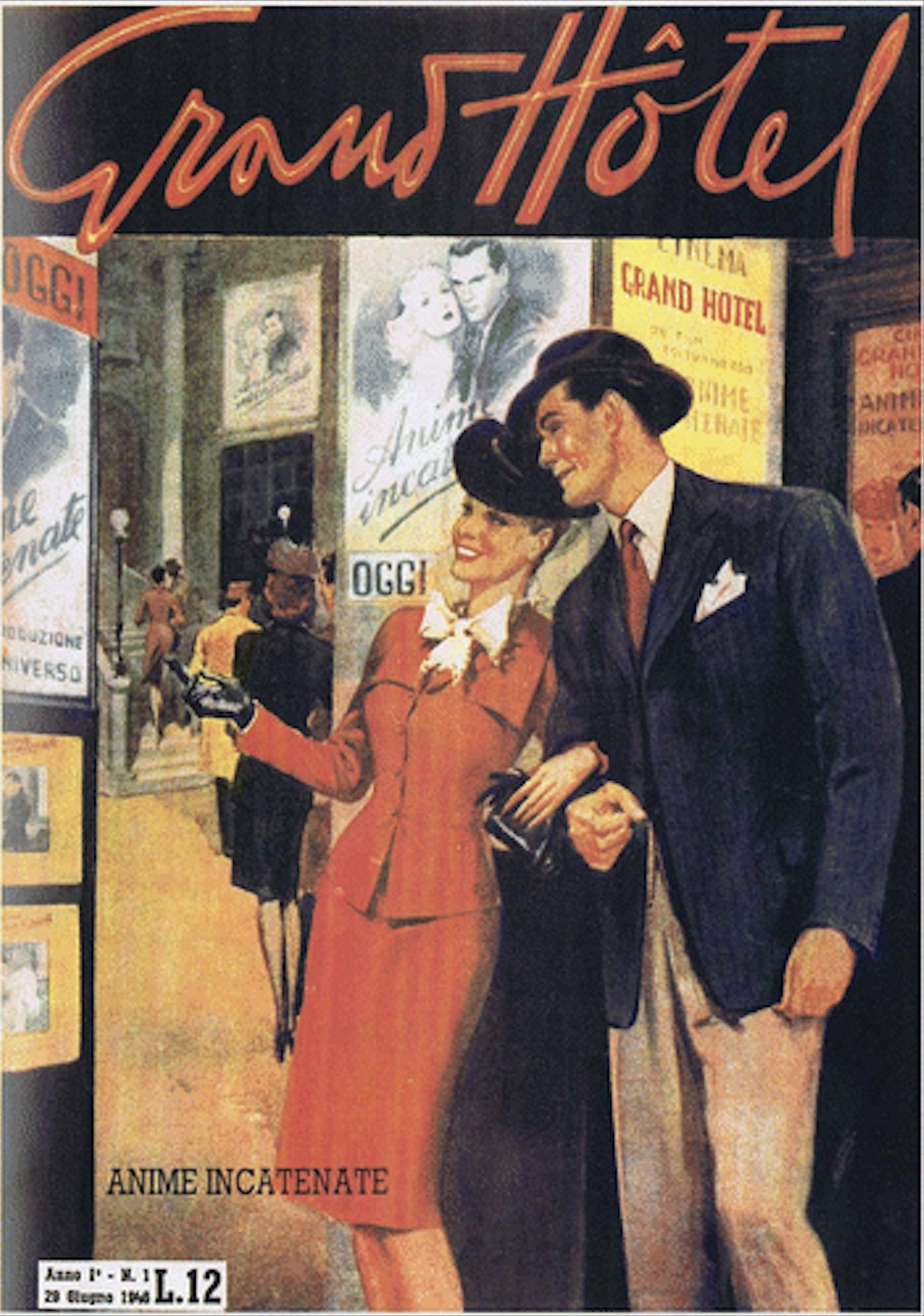
Cover of the first issue of ‘Grand Hôtel’ (a popular Illustrated Novel, June 1946).
Across this period the stories being told all followed a similar pattern. Inspired by the theatrical and literary genres of the melodrama and sentimental short-story, characters were clearly assigned the roles of good and bad, and conflict was always resolved by the end of the novel with a happy return to normalcy. This formula was heavily tied to the social needs of the time with the idea that everything always turns out alright in the end, providing comfort to readers after the hardships of the war.
By the 1970s, photo-novels began to appear in British teen-girl magazines such as Jackie and Blue Jeans. Almost always a Romance set in the modern day, these stories allowed readers to imagine themselves in the shoes of the main character who, though aspirational, was positioned as ordinary and relatable. This was emphasised by the fact that the actors were usually unknown — picked off the street, relatives of a producer, or readers themselves. Some famous actors such as Gina Lollobrigida and Sophia Loren did begin their careers in photo-novels but neither spoke of it openly, likely viewing it as embarrassing or insignificant. Similarly, many creators of these visual narratives worked under pseudonyms, not wanting to be associated with something seen to have such little artistic merit.
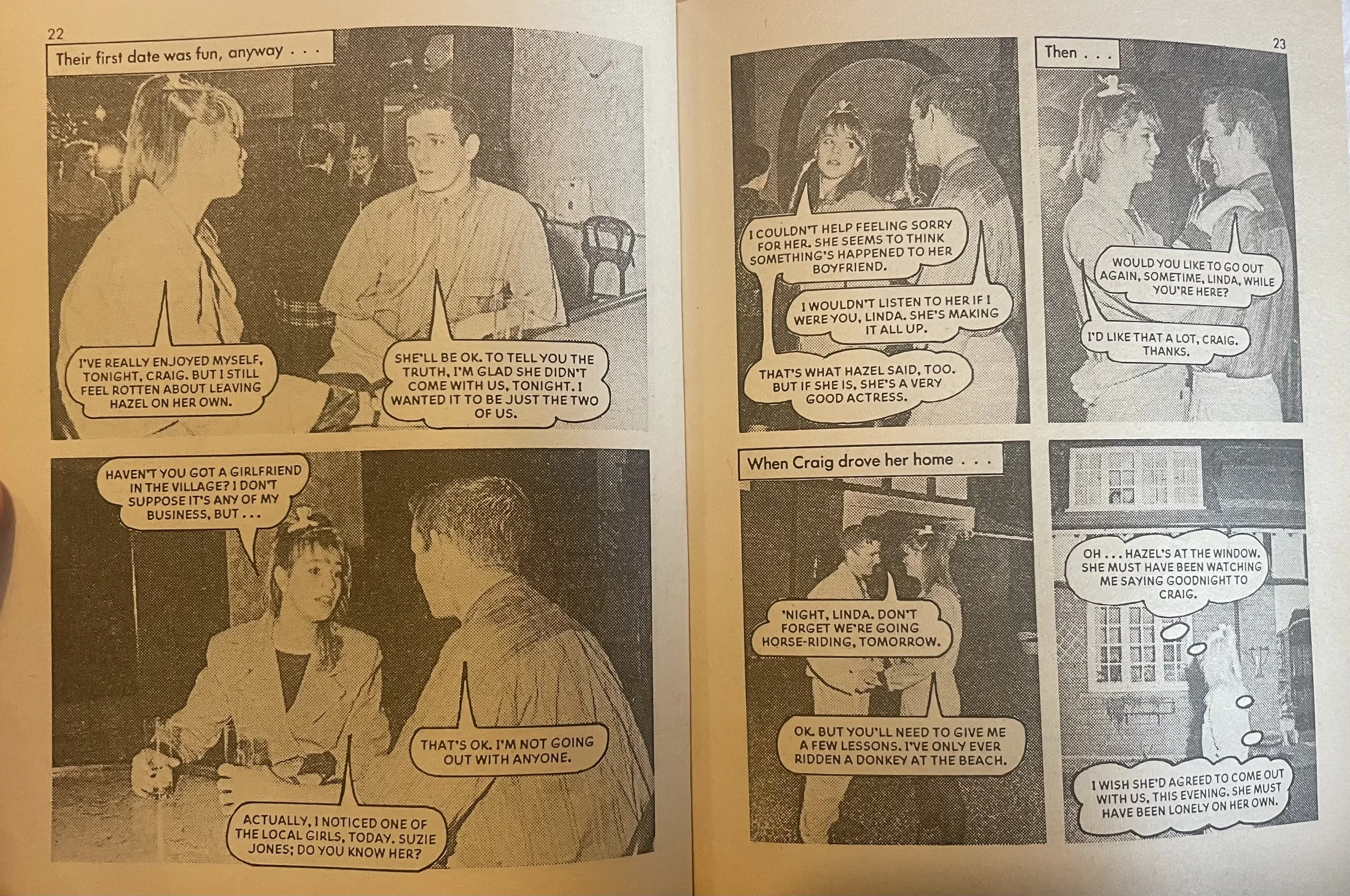
Pages 22-23 of “Risky Business”, a Blue Jeans Photo-Novel, 1988.
Certainly, the format of the photo-novel came with many constrictions which meant that it struggled to move beyond its own fairly rigid conventions. While the illustrated novels that came before had told their narratives through a variety of viewpoints (combining long shots, medium shots and close ups) the photo-novel quickly defaulted to a “talking head” structure, using the close-up in almost every frame. This was because the low quality of the photographs meant that the expressions of the characters could not be easily read from a further distance.
Beyond this visual constraint, the photo-novel’s artistic capacity was further undermined by its association with consumerism. Published in magazines, surrounded by pages of advertisements, it was seen to be promoting a consumerist lifestyle where conformist ideas of what was normal and desirable were pushed upon the reader. This meant that in groups like intellectuals, champions of high-culture, and communists, the photo-novel was especially demonised. In its early days, it could even be seen to provoke moral panic, with concerned citizens worrying that readers of photo-novels (again, mainly women) were losing the ability to differentiate between reality and idealised fictions. Of course, this was soon forgotten, as the serialised TV show became a more dominating power, gradually relegating the photo-novel to a thing of the past.
For many, the trajectory of the photo-novel has come to be seen as an embarrassing footnote in the history of photography and visual storytelling. However, this simple narrative ignores several key factors. For example, it ignores the important role the format has played in the social history of the Mediterranean. Beyond providing comfort during the post-war period, photo-novels also helped with the spread of literacy to poor and rural communities. Where literary novels were expensive and therefore inaccessible, photo-novels were cheap and could be easily followed with the aid of photographs.
On top of this, the photo-novel is by no means dead. In the traditional sense, photo-novels are still being produced, with the magazine Nous Deux still selling 250,000 copies weekly in France as of 2018. Moreover, the visual format has consistently been deconstructed and reinvented through various artistic practices in the 20th and 21st century. For example, it has leant itself very well to satire and parody, the medium appropriated by artist Kaucyila Brooke (1980s - present) in works such as Unknown Deviances (What a Dish!) (1989) and Tit for Twat (1993 - ongoing). In both, she pokes fun at heteronormative narratives around desire and identity, using the combination of speech and image to her advantage.

Kaucyila Brookes, Panel from Unknown Deviances (What a Dish!), 1989.
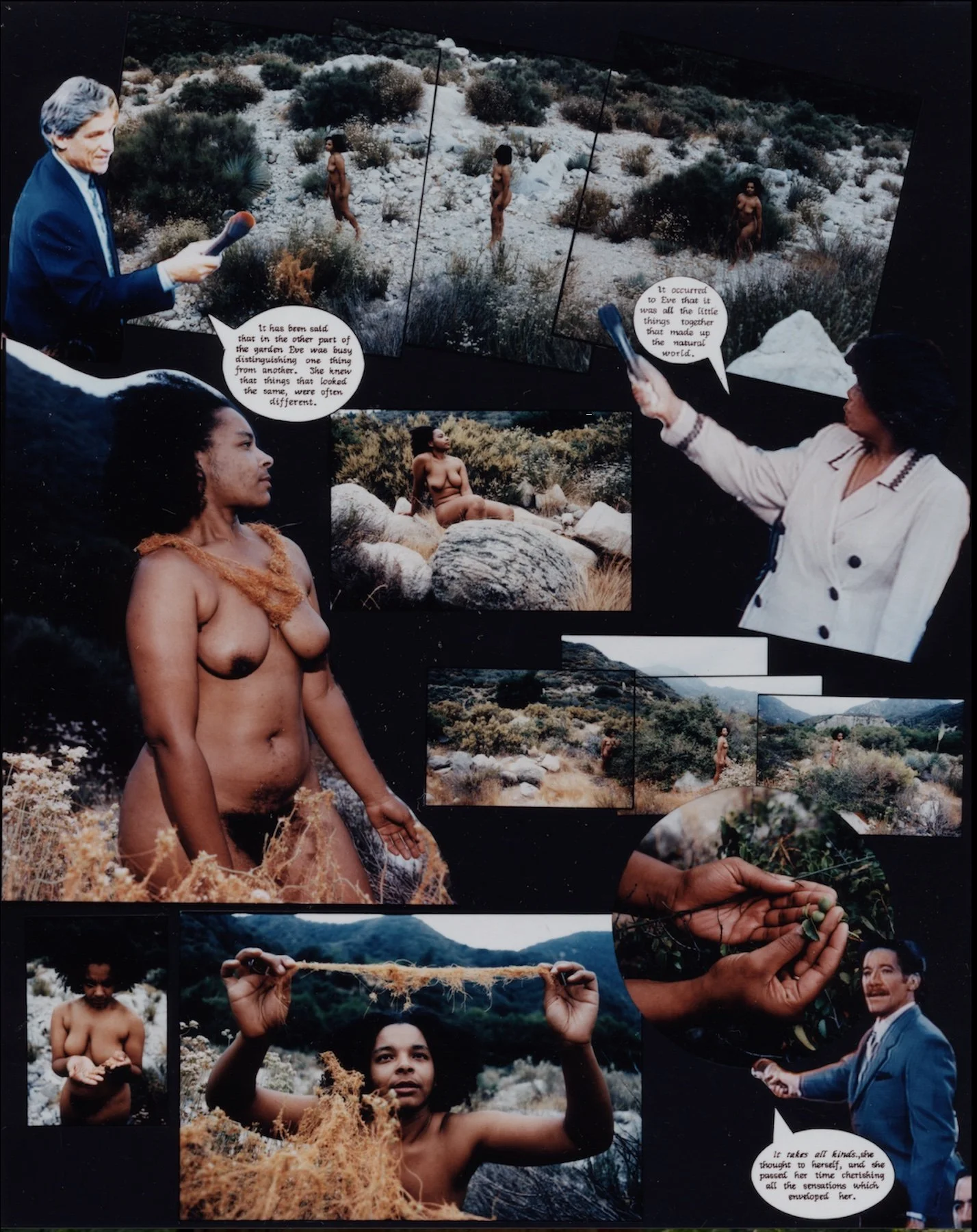
Kaucyila Brookes, Panel from Tit for Twat, 1993 - ongoing.
Ultimately, the photo-novel is a format which has proven to be more adaptable than it may appear at first glance. An underdog of the visual and literary world, it should be understood, not as an outdated curiosity, but as an object of historical significance with the potential for artistic reinvention.
——————————————
Sources:
https://mucem.org/en/expositions/photo-novel/
https://muse.jhu.edu/pub/258/oa_monograph/book/109805/pdf