
The Doom Scroll: Artists in the Digital Age
Words by Georgie Lambert
Edited by Georgina Way
Young artists today are increasingly tackling the issues surrounding the growing addiction to phones and social media in young people. Doom scrolling is a relatable concept for most 15-24 year olds today. In 2023 they spent an average of two hours a day on TikTok. Also, since the increase in use of generative AI, society spends more and more time glued to their screens. For social media users, doom scrolling is familiar and a constant flow of dopamine. Artists continue to critique the damage this concept is doing on young people’s creativity and social skills.
Artists are increasingly challenging the notion that young people are unaware of this problem. Performance pieces such as Attention Economy by Qualeasha Wood highlight this issue by presenting it in a relatable fashion. In this piece, the artist placed her bed in a gallery space along with a screen, mirroring her phone activity for viewers to look at. This piece focused on digital overstimulation and the realities of living through a screen. The viewer sees Wood go through processes of scrolling, taking selfies and trying on filters, all part of daily life for young people today.
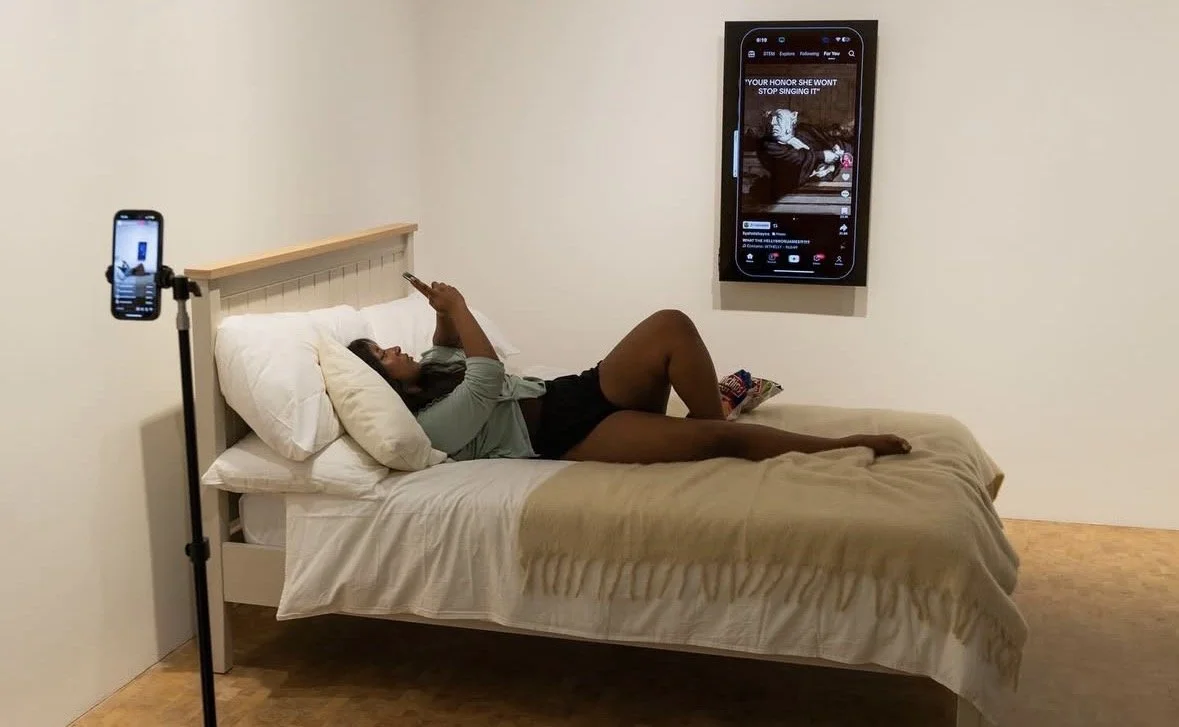
Qualeasha Wood, ‘Attention Economy’, 2025. V&A
Wood often focuses on the digital world in her work and her other pieces like Deus Ex Machina (what was I made for?). This artwork is a tapestry combining traditional embroidery techniques and catholic motifs with modern narratives and issues. It represents her own identity as a Black woman and the struggle to find her sense of identity in the modern digital world. Wood’s work is widely recognised with her Attention Economy performance being displayed at the V&A museum in the Friday Late program. She exposes prolonged rest combined with digital overstimulation, creating an environment that questions doom scrolling. Wood works closely with the Pippy Houldsworth gallery and has held multiple exhibitions for her work there. Her exhibition, Malware, explored overconsumption, her sense of identity and the ways in which the digital world shapes it.
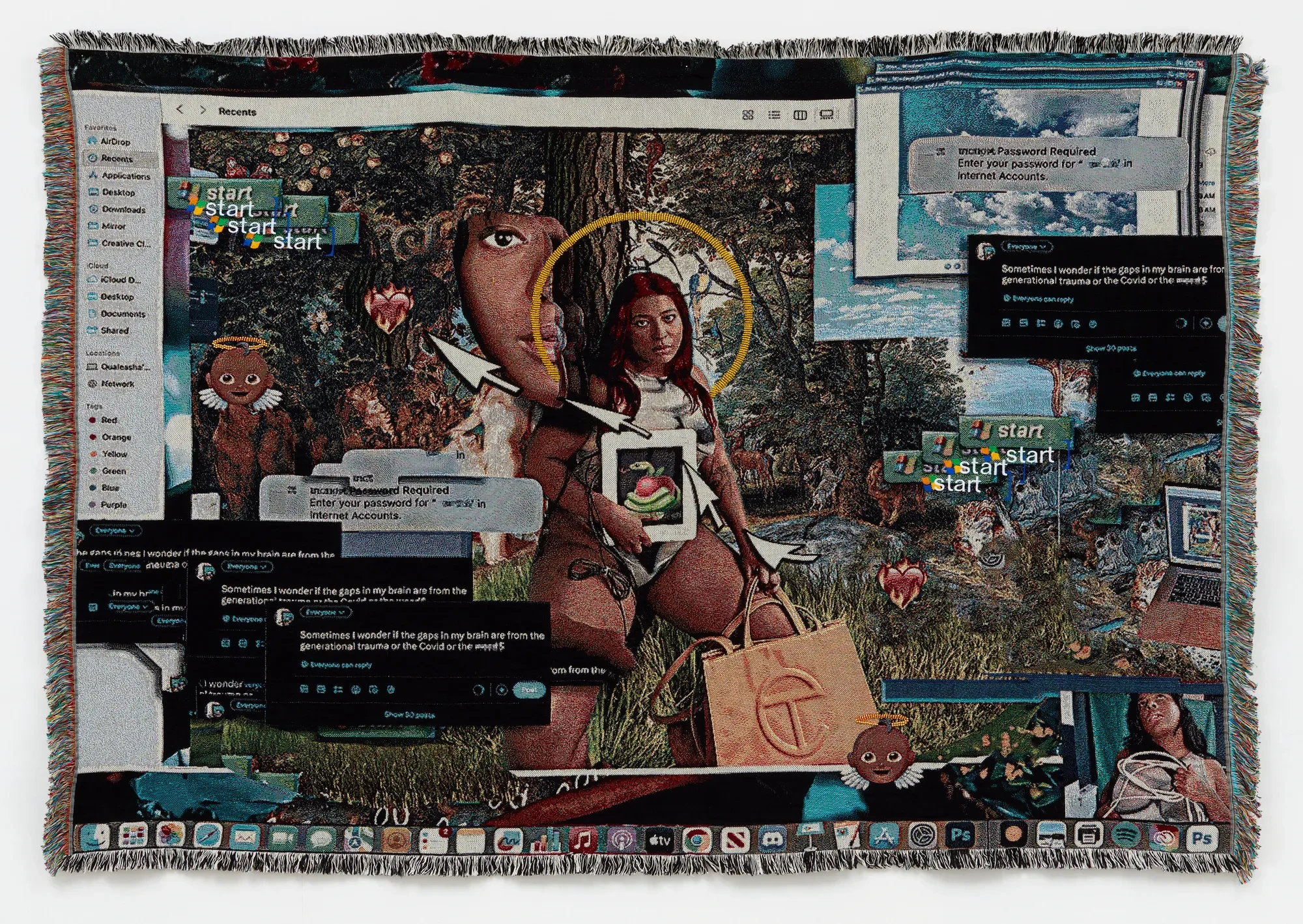
Qualeasha Wood, ‘Deus ex Machina (What was I Made For?)’, 2024. Pippy Houldsworth Gallery
Another artist who focuses on similar concepts is Mika Ben Amar and the series of works under the name of Post Technology. Once again, this artist highlights the ever growing concept of modern technology being integrated into the creative world. With an increasing number of artists relying on digital materials for their artworks, Amar represents this new era of making. This digital sculpture such as Woman Smashing Laptop With Hammer depicts a portrait made of 3932 charging ports. Amar was inspired to make this piece after Apple announced that all new laptops sold in the EU must officially support charging via USB-C (Common Charger Directive). The charging ports are designed to look identical to Apple’s. The work navigates overconsumption, capitalism and contemporary online culture. Amar’s other works include Chrome extensions that remove the entirety of the web page, leaving only the ads and laser engraved messages onto MacBook screens, examining how society consumes and the concept of being chronically online.
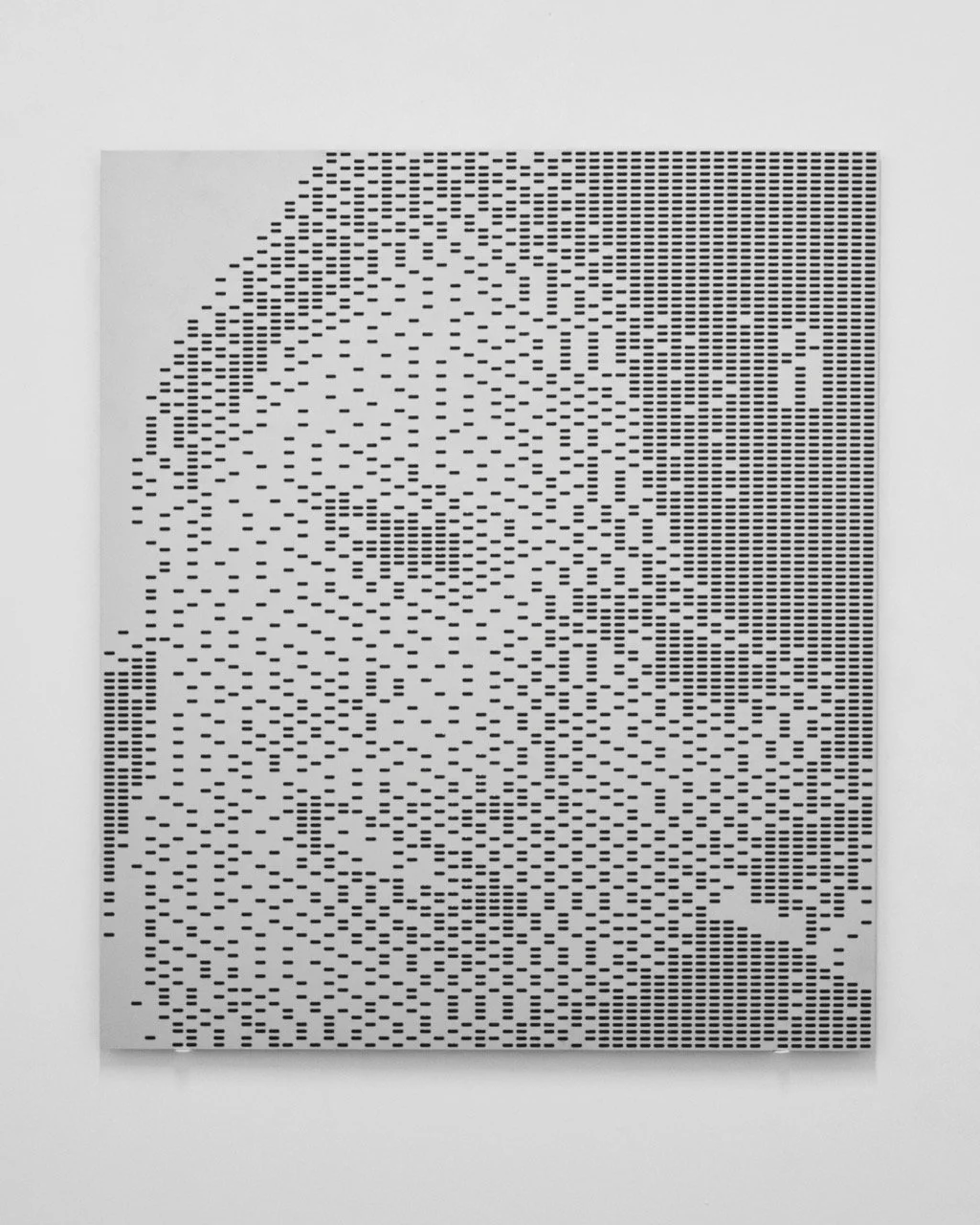
Mika Ben Amar, ‘Woman Smashing Laptop With Hammer’, 2026. FAU Schmidt Center Public Space
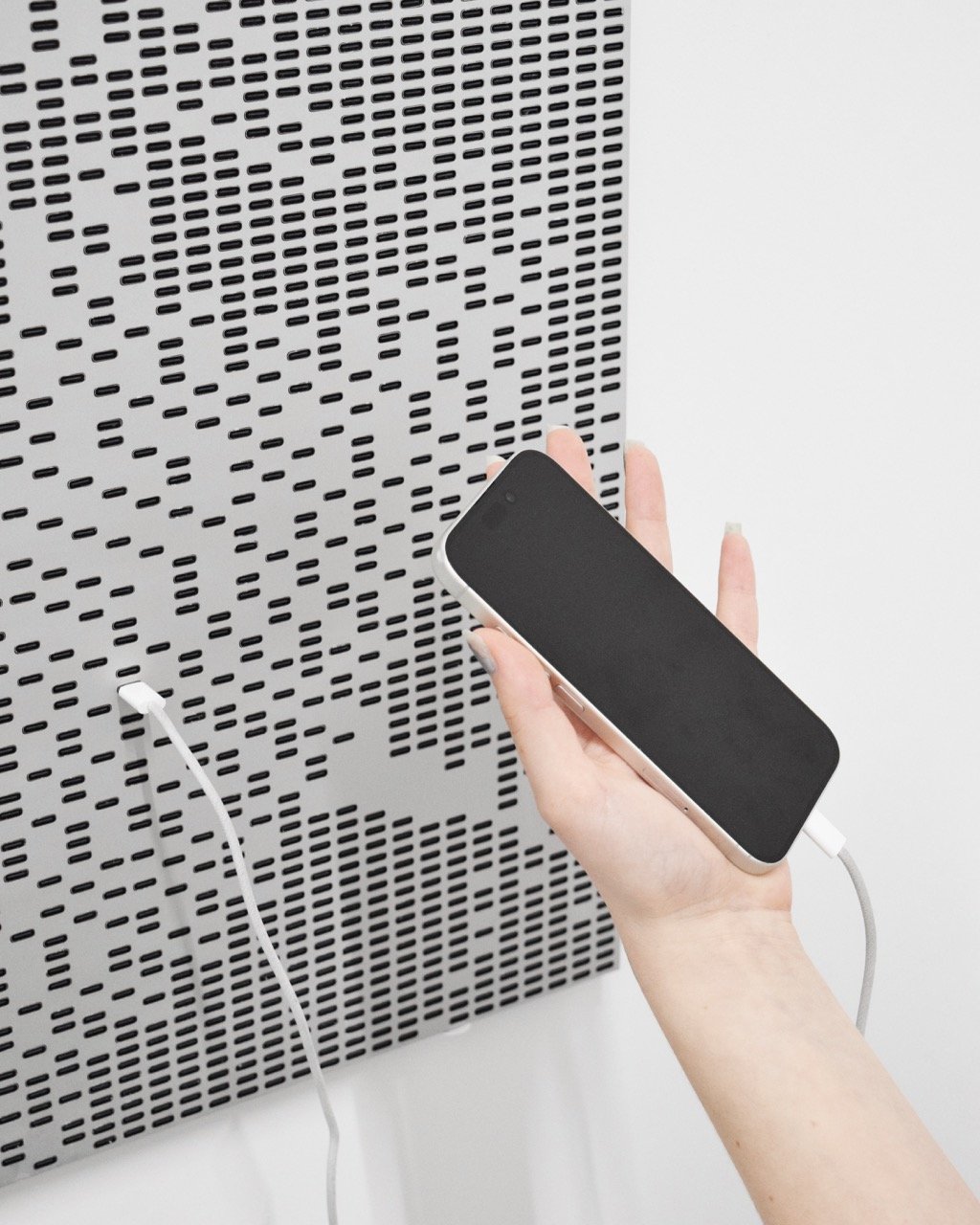
Mika Ben Amar, ‘Woman Smashing Laptop With Hammer’, 2026. FAU Schmidt Center Public Space
Notably, both these artists have large followings on Instagram and their work’s popularity is visible through their online presence. They use their platforms to critique the way social media and technology is used by today’s youth. More and more Gen Z are moving away from this concept of doom scrolling and expanding the use of technology in ways to encourage creative spaces. Today, young artists are promoting the message that the increased presence of technology in the modern world is dangerous, but also opens up opportunities for creative expansion into digital subjects and domains.
Artists on Instagram:
@qualeasha - Qualeasha Wood
@100o111 - Mika Ben Amar