Words by Micha Edis
Edited by Georgina Way
“The exact limitations of one’s taste should be an intense pleasure… Most people are never sure what they like. Pleasure should be a deep, as well as light thing. You should name the book of your life Serious Pleasures” - Stephen Tennant.
Many know about the Roaring Twenties. Fewer know about the British equivalent. Even fewer know about the man at the centre of it all Stephen Tennant. Which is why I was so shocked to see an advertisement for a new exhibition dedicated to this man’s art and life located at the infamous Viktor Wynd Museum. The last time the world saw anything of Stephen’s on display was in the 1970s (and even that was a joint exhibition with Cecil Collins). You can sporadically see him in other Bright Young Things exhibitions, but almost always he is a minor detail when paired with his more famous contemporaries. Cecil Beaton, visionary photographer and pioneer of fashion exhibiting, in particular used Stephen as his muse, and key into upper-class society. Not long after they first met Stephen invited Beaton on a trip with him and his Nanny (with whom he has an ultra- maternal connection to) on holiday, and bought the burgeoning photographer and entire set of monogrammed leather luggage. More ofthen not you could find Stephen in his photos, posing like he was marble come to life. He was dubbed the “Brightest of the Bright Young Things”. There was not a single party he was not invited to.
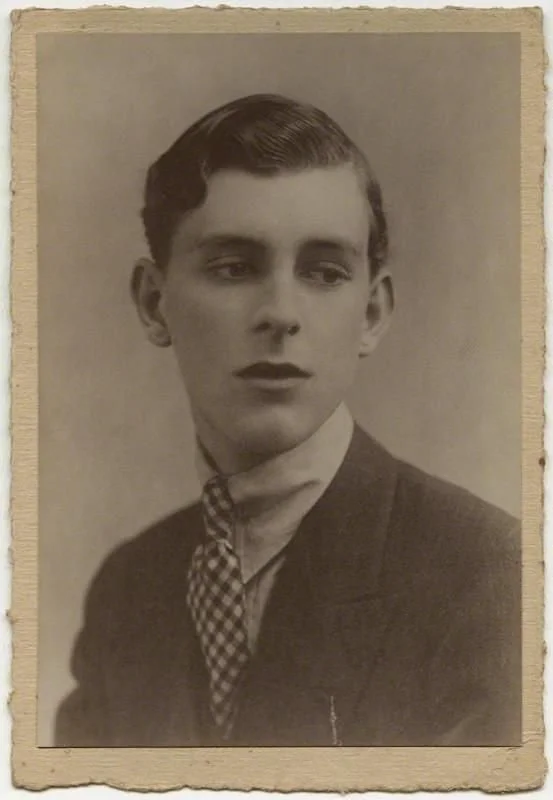
Stephen Tennant (1920-25)
Born in Wilsford cum Lake as the youngest son to one of the infamous Wyndham sisters, Stephen was raised in the lap of luxury. There wasn’t an object out of reach; even when he was sent off to many boarding schools, he never stayed for more than two months before insisting on being brought back home (although he did eventually become a UCL Slade student). He has a few small gallery shows and professional performances during his adolescence. While it seemed he had everything, his health was often weak due to a chronic case of Tuberculosis, a condition that haunted him and his relationships all his life. Often episodes where the disease flared up again lest Stephen bedridden, emaciated, physically and mentally scared, which could only be cured with long trips to the French Alps.
It was clear from a young age that he was going to be a “creative” child, in both the literal and metaphorical sense. Described as an “uncommonly beautiful boy”, Stephen would often put on plays for the family, dressing up in his mother’s gowns and coating himself in makeup. As a young teen, he would often sneak out to buy kisses from visiting soldiers. By his 20s, there was no doubt that he would live openly about his sexuality, encouraged further by the breakdown of social rules during the inter-war period, and the rise of a more socially liberal England. While he and his friends (some of which were E.M Forester, Virgina Woolf, Evelyn Waugh, Nancy and Diana Mitford, and Rex Whistler) were throwing lavish parties, hide and seek games that sprawled London, and engaging in cat chases, the press wrote down every detail. More than once Stephen was said to have coated his hair in golden glitter. While Stephen only had one noted lover it’s hard to say they didn’t have an effect on one another. Said lover was Siegfried Sassoon, the grizzled, masculine, war poet twice his age, who he was romantically entangled with him for six years. Meeting at a mutual friend’s party, they each described it as love at first sight in their diaries, and snuck off at some point during the weekend to make love at Stonehenge. Much of their relationship was spent travelling around Europe (with a parrot and Stephen’s nanny) or staying at their private house. To say that they were obsessed with eachother would be an understatement. “He put his mouth over mine crushing it - some kisses seem to draw the very soul out of one’s body - his do mine. I feel all my heart swooning at the touch of his mouth - my soul dies a hundred million deaths when his face is on my face and neck.” - Stephen Tennant (diary) They spent so much time together that Stephen’s friends (who had grown disdainful of Siegfried, refering to him as “THAT fox man”) on occasion had to beg to see him alone.
However, all good things must come to an end. Sassoon had historically struggled not just with his sexuality but with his place within relationships. Only begining to engage in sexual relationships in his 30s, the man has a need to be the dominating masculine one in the relationship. And while that was no problem with effeminate Stephen, Siegfried’s favourite way to show off his role was financially which was a problem seeing as Tenant had vastly superior wealth. Pairing Sassoon’s own insecurities with Stephen’s constantly ailing health, the relationship started to strain.
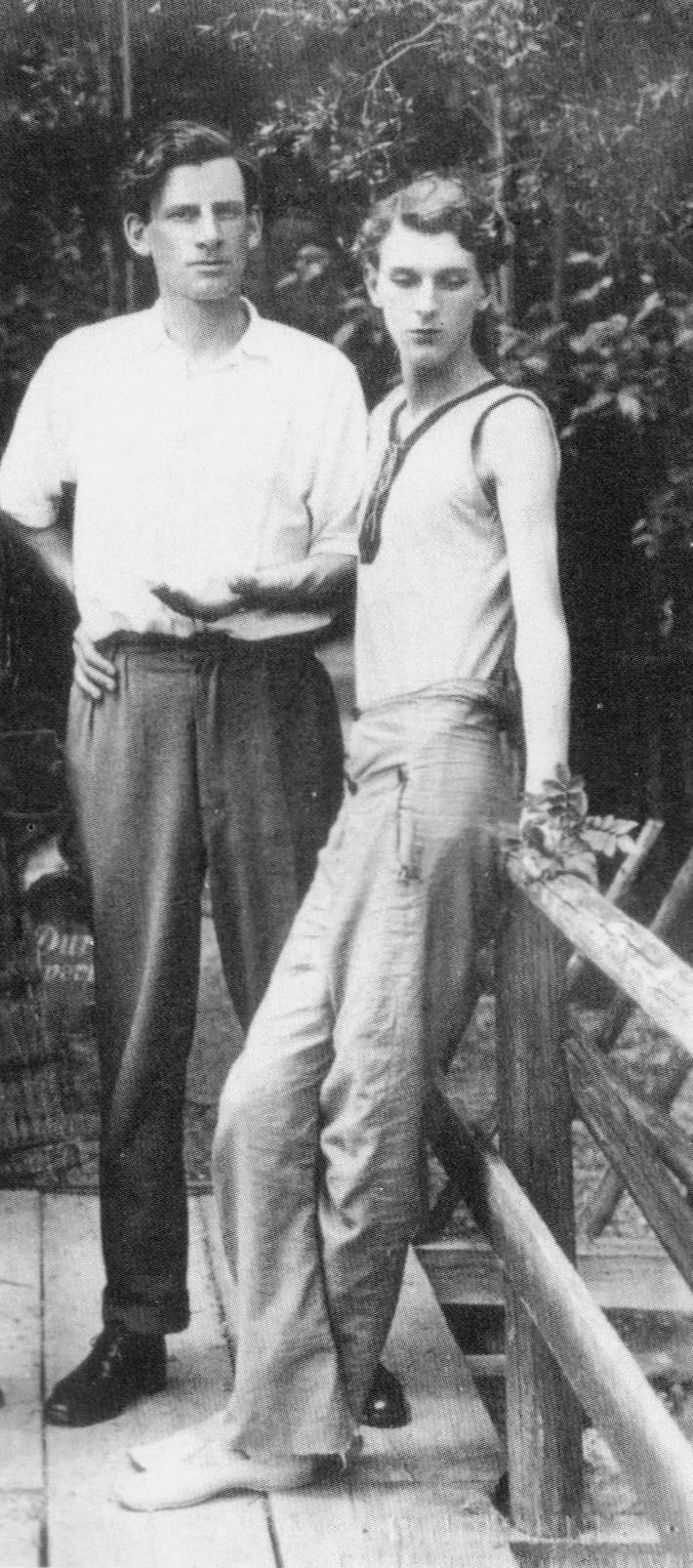
Siegfried Sassoon (left) and Stephen Tennant (right) 1929
During a particularly bad TB episoed Stephen’s health rapidly declined and Sassoon got more and more controlling barring all guests from Stephen’s estate; an incident involving forcibly switching out Stephen’s doctors resulted in calling the relationship off through a note delivered by his doctor. The breakup was so disastrous for Siegfried that he married his wife a year later (many who said that she bore an uncomfortable resemblance to Stephen) Many a book character found their origin with Stephen. Most famously the characters of Sebastian Flyte from Brideshead Revisited and Miles Malpractice from Vile Bodies (later adapted into the movie Bright Young Things) written by contemporary Evelyn Waugh were based on Tennant.
His fondness for the plush sides of life: holidays, no work, lax education, a mother and a nanny who would give him anything; he was practically set up to become known as “The Man who Stayed in Bed”. After World War Two he receded from public life, helped by the fact that Britain had slowly become sick of him and his set. This doesn’t mean that he was a complete recluse. He spent much of his time outside of his house travelling to the US, where much of his creative circle had begun to drift. If not in the US, he was working on his magnum opus: Lascar: A Story of the Maritime Boulevards (or A Story You Must Forget). Lascar typically referred to the south asian deckhands and sailors from the 16th to the 20th century, a topic that had fascinated Stephen, as can be seen in the many illustrations of burly tanned sailors. While there is no defined manuscript, it instead turned into a sprawling archive of illustrations, letters, notes, colleagues, drafts and poems. It was supposed to follow these rugged, troubled, supremely masculine figures, with a decadent, romantic, psychologically haunted air about it. Stephen spent roughly 50 years working on Lascar but ultimately never finished it.
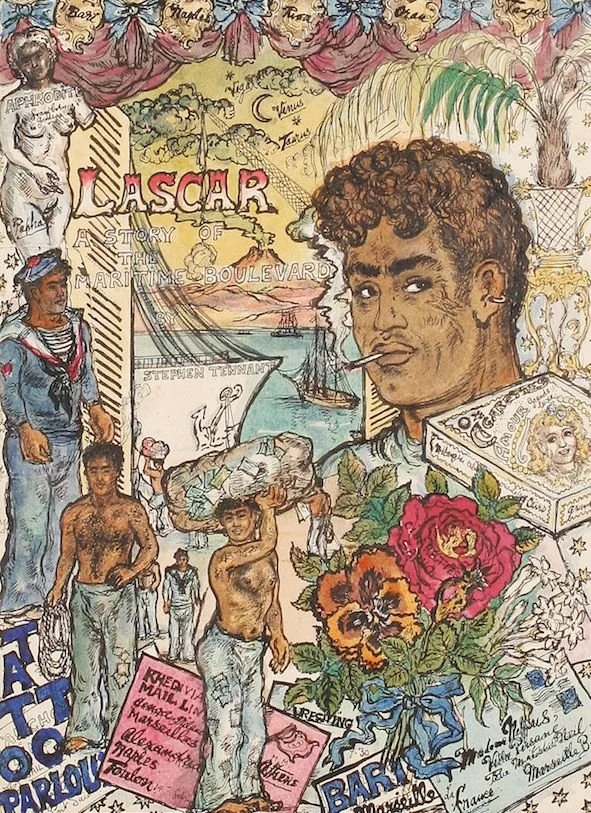
Lascar - A story of the Maritime Boulevard
These letters and illustrations are what made up the large bulk of the exhibition at the Viktor Wynd Museum. Entitled “Lascar – The Art & Ephemera of Stephen Tennant”, the museum/absynth bar/cabinet of curiosities was covered in original copies of Stephen’s work, much of which had been collected at the initial estate sale after he had died. This alone was enough to excite me, but what really drew me out of York to visit for the opening (and drew the £40 train fare out of my bank account) was that Philip Hoare would be signing a re-released edition of his Stephen Tennant biography. Hoare was one of the last people to speak to Stephen, and has dedicated much of his life to keeping Stephen’s memory alive. This wasn’t just the first solo tenant exhibition since the 50s; it was also the first time the book would be in publication since 2001!
The venue itself was packed full of the most interesting characters: an old gay couple in matching velvet jackets, a man with a necklace made of teeth, one of the largest collectors of Stephen’s life, a man in full Victorian getup and a large cape. It seemed every vampiric character of London had stalked their way over to share what Stephen meant to them. Philip Hoare himself spoke at length with everyone who had their copy signed. When I explained to him that I had forgotten to bring my vintage copy of the book, which was falling apart from how often I had read it, he laughed, called me sweet and signed a postcard free of charge to put in my copy back home.
The exhibition itself was clearly geared towards established fanatics of Stephen’s life. While the catalogue (which I also snapped up a copy of) had some insightful tidbits, especially on his childhood works, all of the displays were left without information plaques. While this is typical of the Viktor Wynd’s typical curatorial style, I can only imagine what an ordinary patron with no knowledge of this man might think.
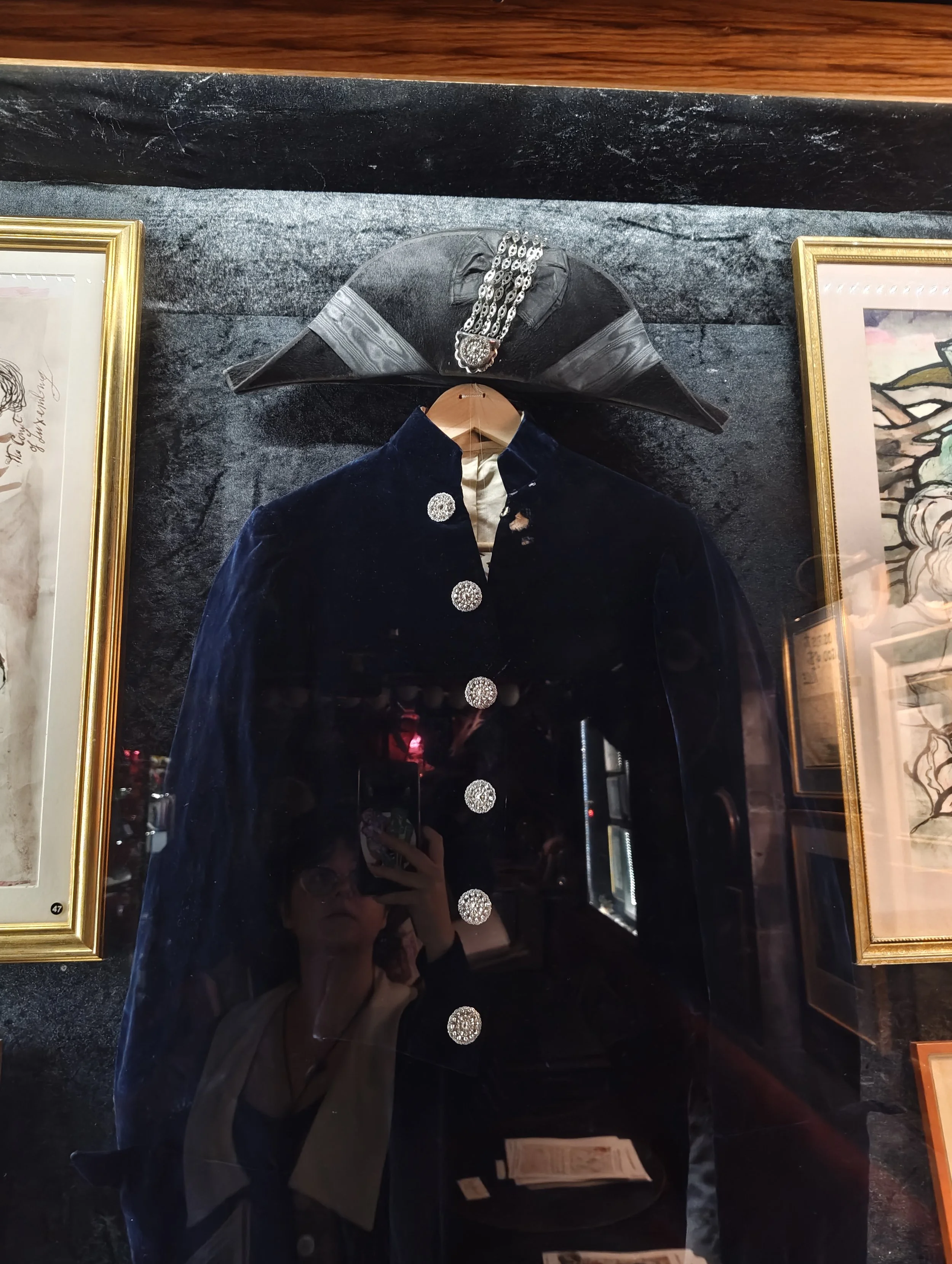
Stephen Tennant Velvet Fancy Dress at the Viktor Wynd Museum
Other than that, I thought that the displays were beautifully put together. Each had a centrepiece which was then surrounded by supporting ephemera. The centrepieces seemed to capture the different facets of Stephen’s life: a portrait photograph (Cecil Beaton, and his love of posing), the velvet admiral costume (his love of fashion and the heyday of inter-war partying), and then two were dedicated to his illustrations (his ultimate life partner). It was incredible to see these pieces that I had only ever experienced in low-quality scans through my phone in real life. The exhibition really gives us not just a taste of Stephen, but also of what we could have received if only Stephen had finished his novel.