
How yesterday’s fares are becoming tomorrow’s wears
Words by Georgina Way
Edited by Myfanwy Greene
SOLD!
There was an impressed buzz about the room, interrupted only by the smart knock of the hammer coming down during the sale of 180 beautiful, striking, mystifying but all undoubtedly unique and incredible lots in the extensive sale of Naga jewellery and assorted accessories at Woolley & Wallis Auctioneers, February 2025. Sale highlights included an intricately carved wooden pipe, a Naga man’s headdress, body cloths, brass torques and a vast array of necklaces and other jewellery pieces leading up to an astonishingly fine large necklace with six layers of graduating carnelian beads attached with shells and adorned with bell pendants, which sold for over three times its estimate.
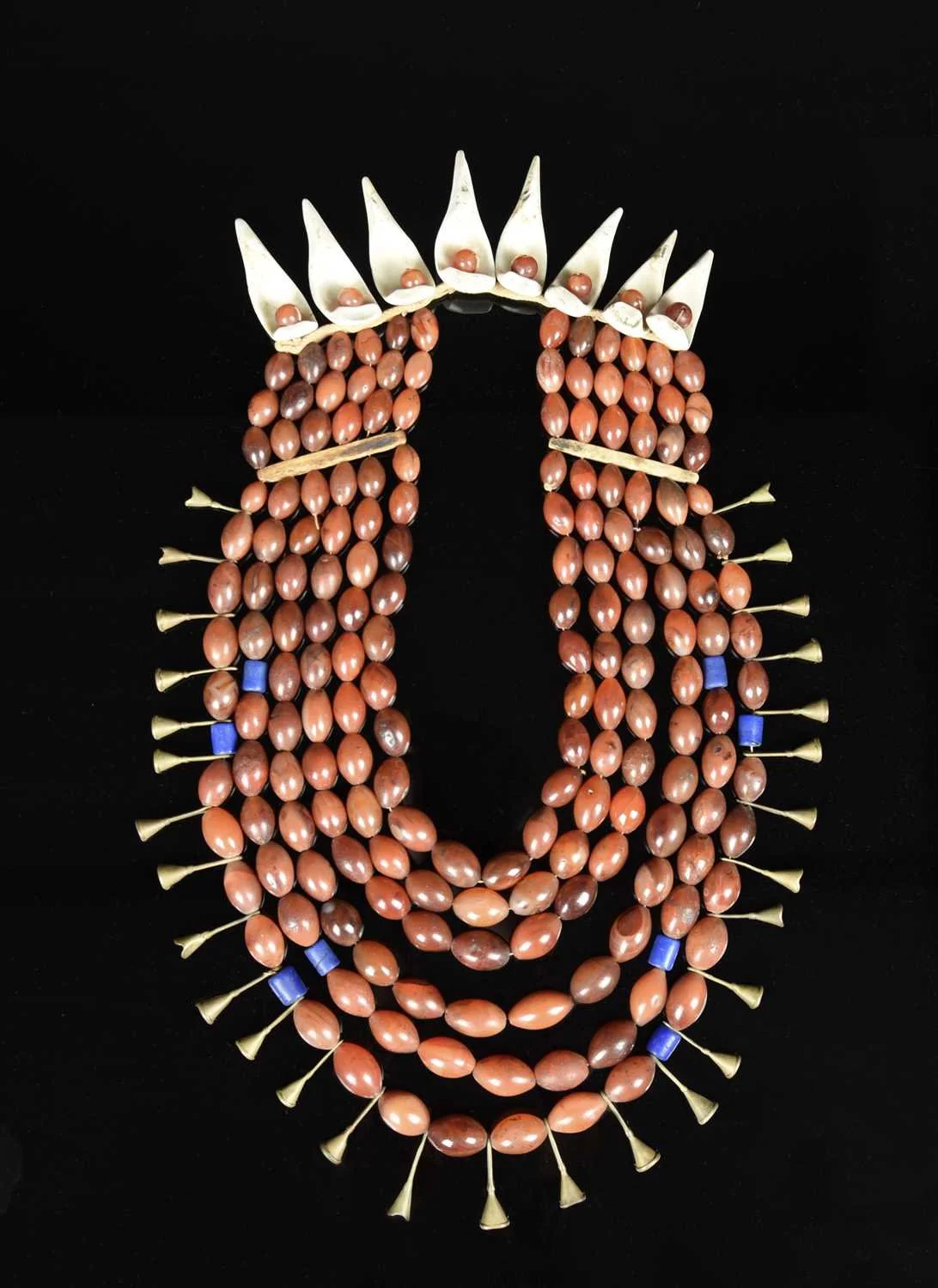
Lot 35: A Naga woman's large necklace. Image taken by author, courtesy of Woolley & Wallis.
So, who exactly are the Naga people and why does their traditional attire attract such attention? How has one group of people from the highlands of North-East India managed to defy numerous attempts to integrate them first into Western-Christian and latterly independent Indian society?
The spread of the missionaries during the 19th Century brought Christianity which was vigorously enforced upon the different tribes who for centuries beforehand had peacefully followed their own beliefs and religions. Whilst the Hill people of Nagaland submitted to some extent, their culture is so steeped in tradition and routine that it could not easily be broken. Composed of several tribes (at least 14 of which are still recognised today) they were considered aggressive and cannibalistic due to one tribe in particular, the Konyak’s, penchant for headhunting. What is rarely mentioned, however, is the peaceful and harmonious existence by which the vast majority of the Hill people have lived for centuries. Still a predominantly agricultural society, they are a people who take huge pride in self-identity and status, usually depicted by their lavish adornments. These range from ornate brass wristlets incised with chevron ropes and dots, to headhunting brass chest ornaments, finely decorated conch shell earpieces and skillfully embroidered body cloths (complete with cowrie shell pattern depending on status), and exquisite necklaces made from a kaleidoscope of coloured beads. In the Mokokchung district of Nagaland, carnelian beads are used to show wealth and status. An example of one of these is the extraordinary six-layered piece which was the highlight of the February sale. Tactile and deceptively heavy, it is an example not only of the talent and craftsmanship of the Naga people, but also just how highly they value status.
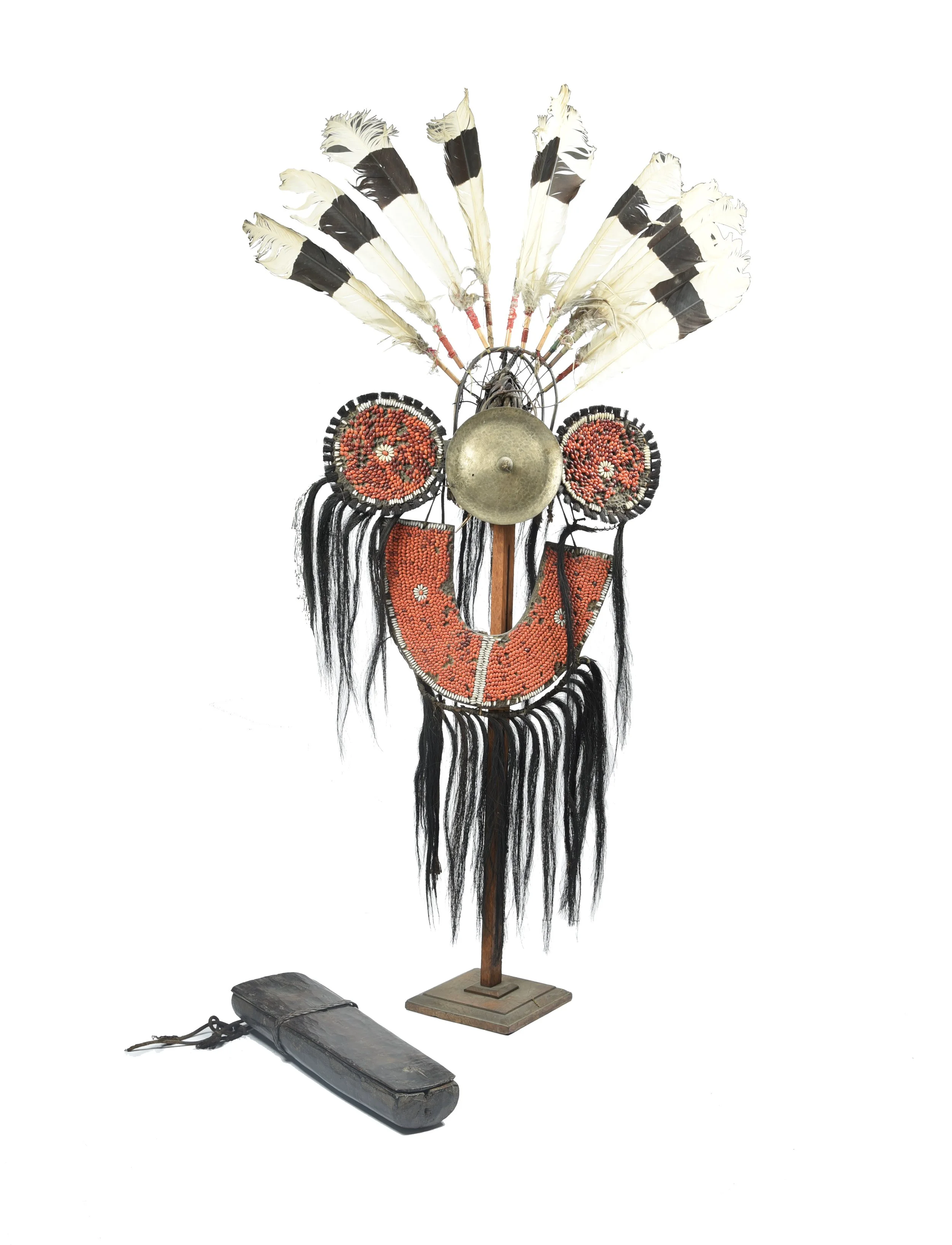
Lot 137: A Naga man's headdress. Image taken by author, courtesy of Woolley & Wallis.
But where did the materials for such opulent ornamentation come from? The luxurious carnelian beads hailed from Khambat in Gujarat whilst the array of smaller beads came from Nepal and China as well as being traded across from Venice. These beads, together with the cowrie shells, originate from the tropical waters of the Pacific and Indian oceans, and would serve as forms of currency, often with the individual beads possessing the greatest value. This continued until 1947 when Indian Independence caused conflict with the Naga people who strongly rejected integration within Indian society. Suddenly, the use for such heirlooms and trading pieces became redundant, and the age-old tradition of bartering with such pieces ended abruptly. Thereafter followed a turbulent and often violent fourteen years with almost constant conflict between the Nagas and the Indian Government, who failed to acknowledge that 99% of the Naga people wanted to remain independent from the Indian state. In an attempt to crush what they saw as a threat, the Indian Government burned almost one hundred Naga villages and, with them, countless pieces of valuable and irreplaceable jewellery. This, compounded with the unwelcome Christian revival of the 1970s and early 80s, were devastating to the Naga people, and for a while it seemed like the traditions and cultures of these proud tribes faced irreversible jeopardy.
With the dawn of the new century came the fresh desire to preserve their heritage. This cultural renaissance has continued to gather steam over the last fifteen years as Naga workmanship has come to be recognised as a distinct, delicate and beautiful art form, no longer viewed as the preserve of collectors fascinated by the apparent gruesomeness of what they saw as a pre-civilised collection of indigenous art. Even the cane head baskets, once regarded as macabre and archaic, are now being revered with fascination, as we slowly begin to understand more of the cultures and ways of the Hill people.
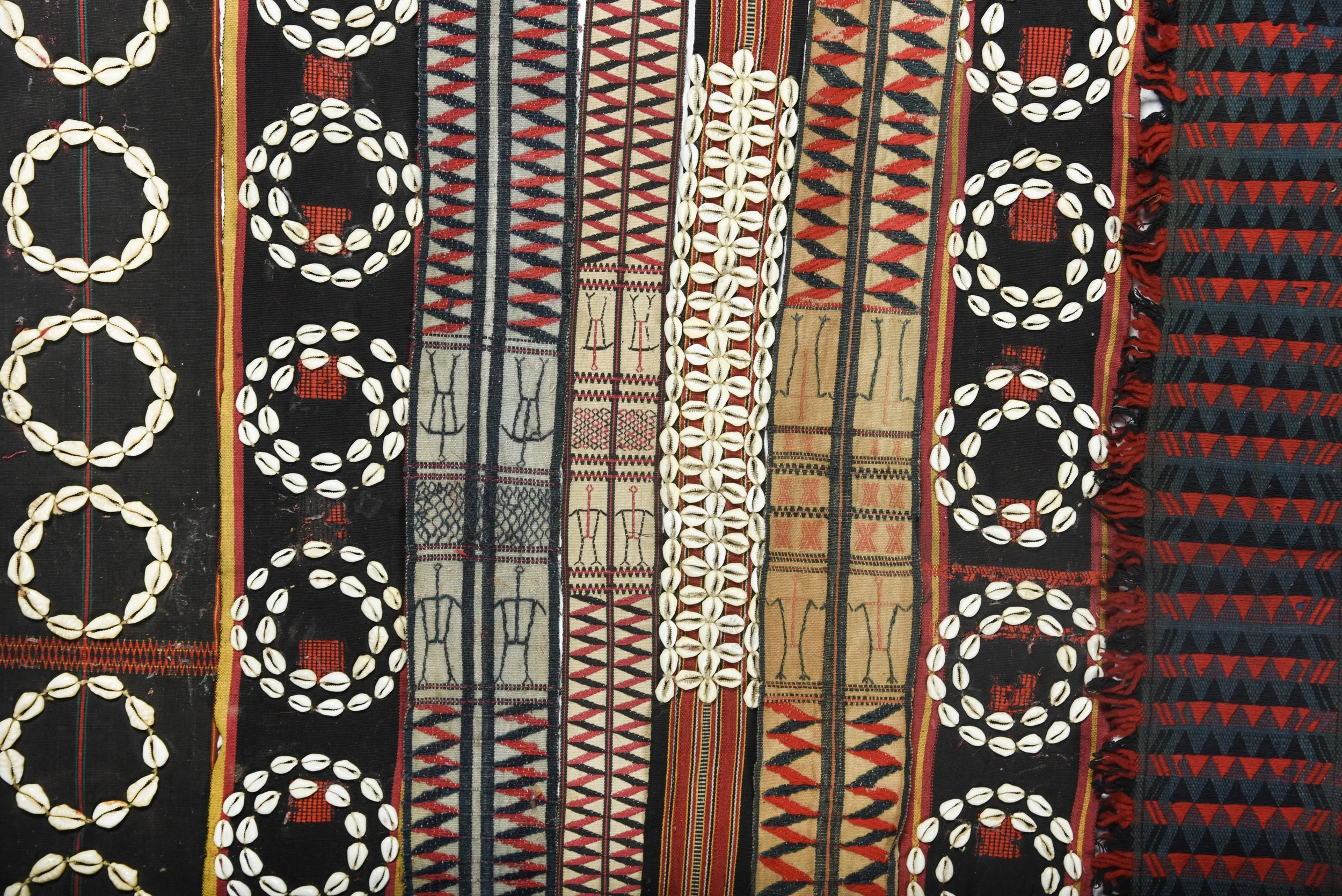
Lot 124: Ten Naga sashes. Image taken by author, courtesy of Woolley & Wallis.
With the dawn of the 21st Century, a fascinating dichotomy between traditional and modern Naga wear emerged. On the one hand, the Nagas still maintain a traditional agrarian lifestyle, following the rituals and festivals of their ancestors. The wearing of traditional adornments is becoming less common and is generally reserved for festivals and tourist purposes. However, the younger Naga generation still feel a close affinity with their roots and are increasingly blending indigenous with modern accessories. Girls from the Sümi tribe can be seen wearing long winter coats and boots adorned with bone and bead chokers. Young Konyak women wear vibrant large modern necklaces. They have embraced the advent of social media and use these platforms to showcase their outfits. The loss of tradition and identity, particularly over the last 60 years, is much lamented by the Naga people and yet, in a prying and inquisitive world, they have found a way to evolve and to continue their traditions, honouring their collective past whilst engaging with the future.
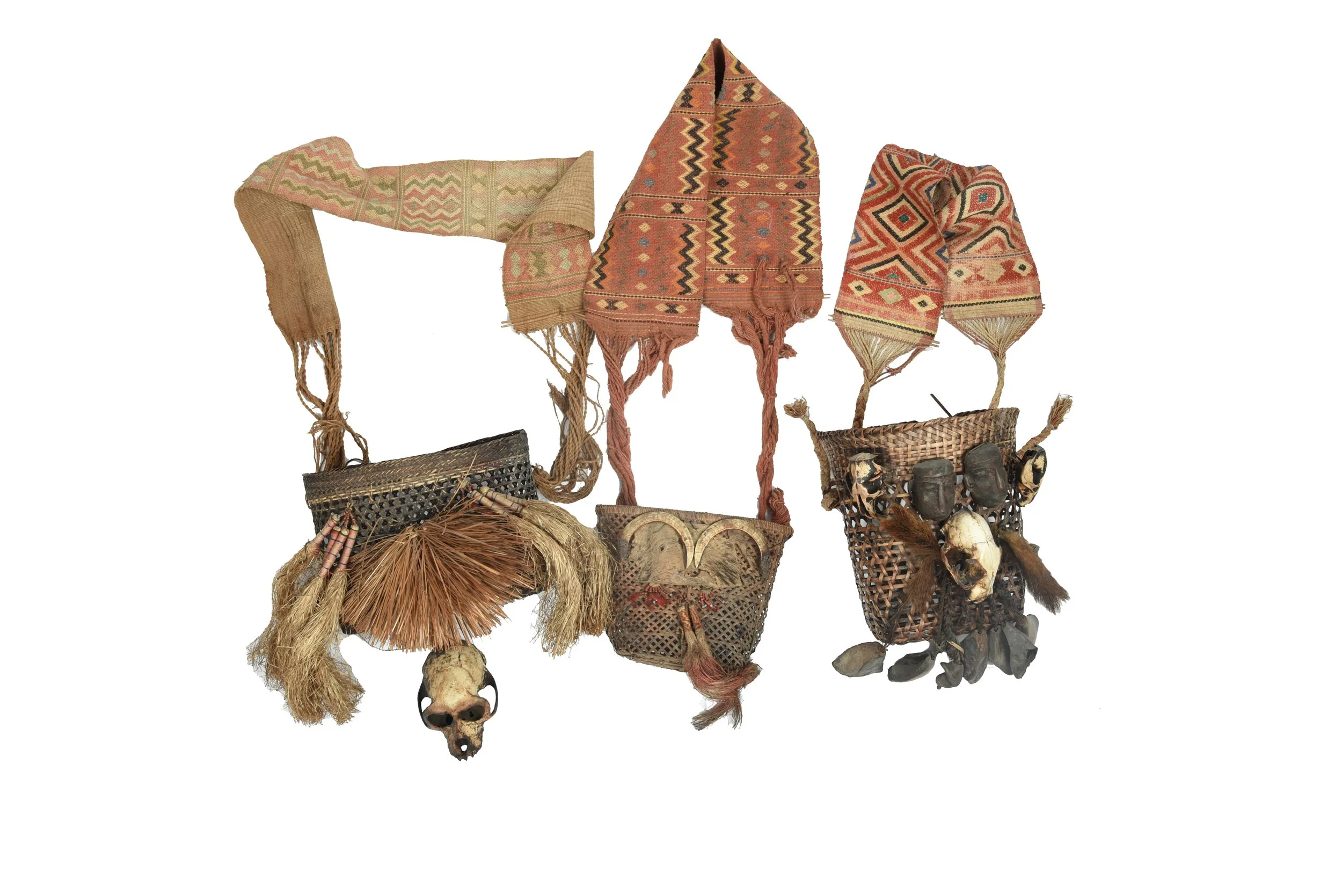
Lot 153: Three Naga baskets. Image taken by author, courtesy of Woolley & Wallis.
For further reading I would really recommend The Nagas: Hillpeoples of Northeast India by Julian Jacobs, or, visit:
https://www.woolleyandwallis.co.uk/departments/african-oceanic-
art/tr190225/?p=1&s=40&v=list